Boryeong Mud Festival 2026: Why Korea’s Messiest Summer Tradition Matters Now
From July 24 to August 9, Daecheon Beach turns mud, water and a seaside city into one very Korean kind of summer gathering.
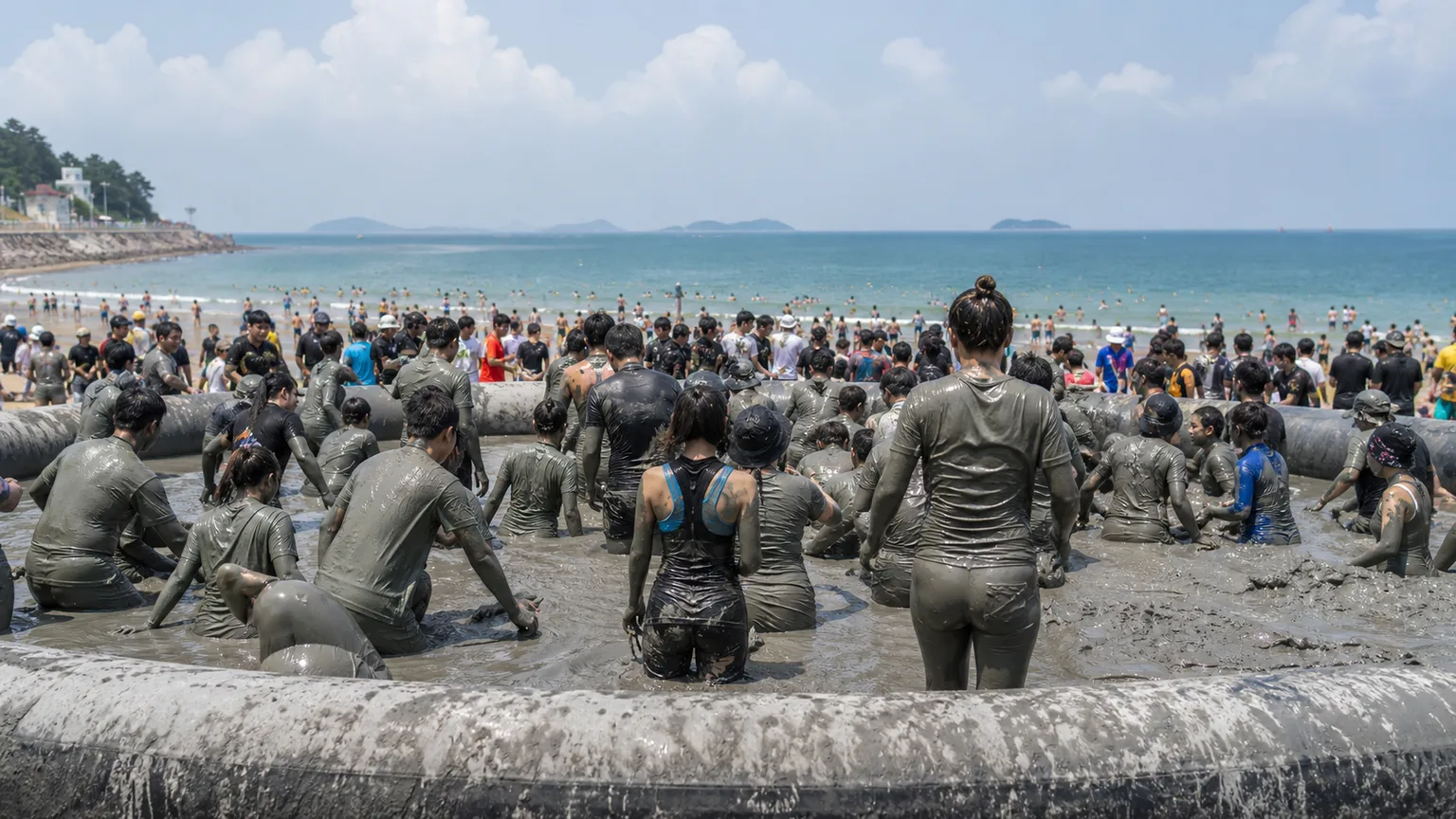
A Korean summer festival can be surprisingly practical. It is a reason to leave Seoul, a way to experience a regional city at full volume and, in Boryeong, permission to get completely covered in mud. The 2026 Boryeong Mud Festival opens today, July 24, and runs through August 9 at Daecheon Beach and the Boryeong Mud Expo Plaza. That timing is exactly why it is back in travel conversations: it meets the hottest, most humid part of the season with something deliberately physical, communal and outdoors.
The festival’s core idea is simple rather than precious. Boryeong’s tidal-flat mud is turned into play: mud zones, family areas, water activities and evening programs put the material at the center. This year’s reported additions include expanded activity zones and a sea-view infinity pool, so the event is not merely repeating a familiar formula. For a visitor, that makes it a useful counterpoint to the polished side of Korean culture often seen online. You do not come to look immaculate; you come to join in.
Why it is trending this week
The immediate news hook is the opening. A July 20 report from Korea JoongAng Daily described the 2026 event’s larger mud zones, more night programming and new infinity-pool feature; the Korea Tourism Organization’s current summer-festival guide lists the same July 24–August 9 window. In other words, this is a live seasonal event, not an evergreen listicle dressed up as news.
Google Trends’ Korea “Trending Now” page was also checked on July 24. Its active searches were dominated by unrelated consumer, sport and entertainment queries rather than a clear festival keyword, so it was used as a market scan—not as proof of any festival fact. The stronger signal for this article is the current opening coverage and the official tourism calendar.
From local material to shared ritual
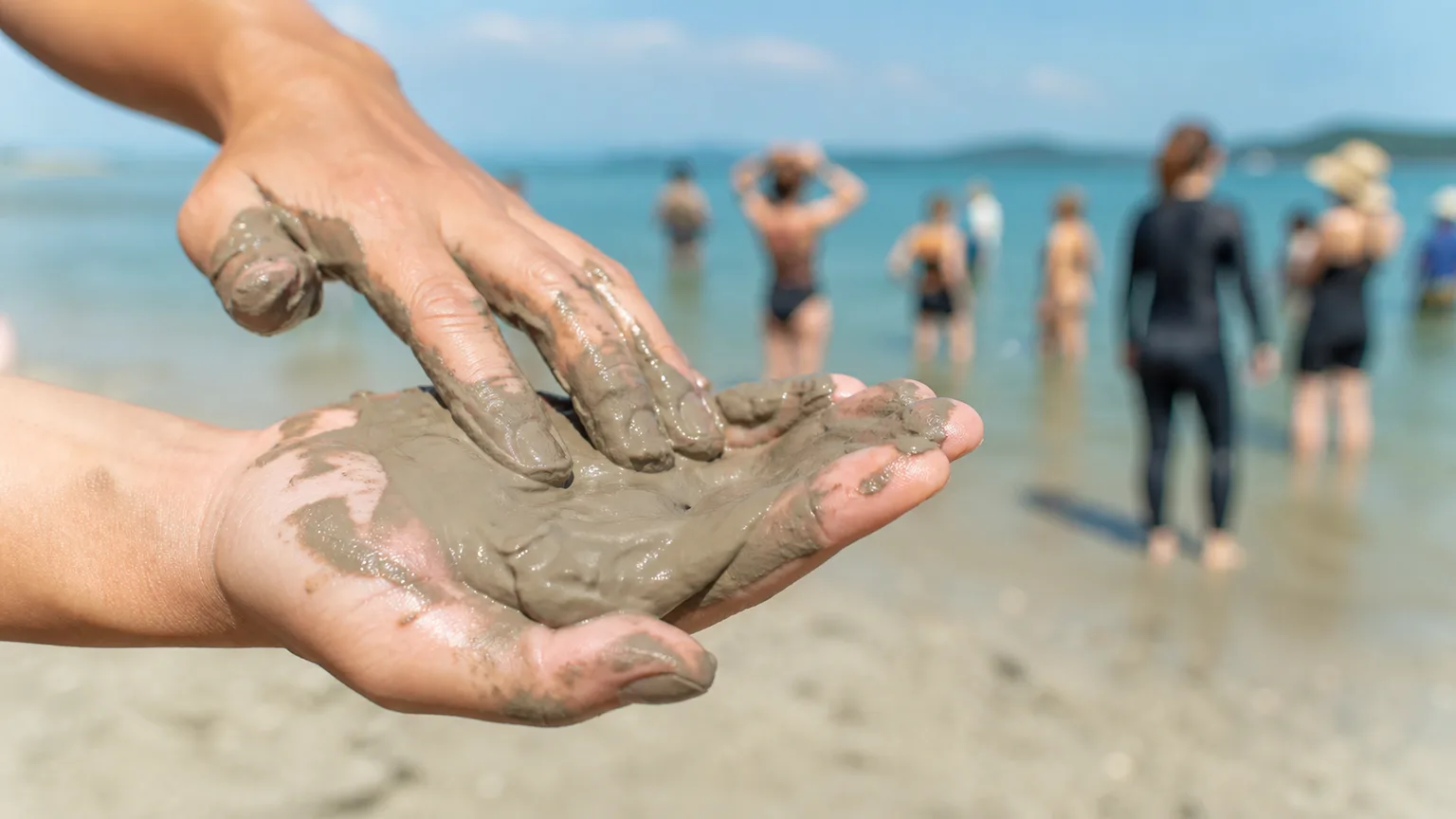
Boryeong’s appeal makes more sense when read as local branding rather than novelty alone. The city produces and sells mud-based products, including cosmetics, soap, shampoo and face masks; 2026 also marks 30 years since it began selling mud products, according to the city official quoted in the current report. The festival turns that local material into an experience that can be understood without Korean language skills. You can see the beach, feel the mud and follow the energy of the crowd.
That translation from region to experience is part of a broader Korean festival habit. Summer events often make the weather itself the theme: water, beach, music, food or nighttime light. The national tourism guide groups Boryeong with other seasonal outdoor gatherings and calls it one of the country’s internationally famous festivals. It is not a replacement for a quiet beach day; it is a different proposition—a public, temporary world built around the coast.
Choose your day around the kind of experience you want: broad daytime activity and beach atmosphere, or an evening program with cooler temperatures. Wear clothes and shoes you are genuinely comfortable getting dirty, keep electronics protected, and use official festival information for current schedules, entry rules and transport. If you are planning skincare or cosmetic purchases, treat them as regular consumer products: check ingredients and patch-test when appropriate rather than assuming a festival ingredient will suit every skin type.
How to read the atmosphere
First-time visitors sometimes approach a Korean festival as if it were a checklist: arrive, photograph the signature attraction, leave. Boryeong rewards a looser approach. Watch how groups organize themselves around activities; notice how beachwear, sunscreen, towels and waterproof bags become part of the shared visual language; and give yourself permission to be a participant rather than a spectator. The mud removes some of the usual pressure to look polished. That is one reason the event works across languages and ages.
It also helps to understand the geography. Boryeong is in Chungcheongnam-do on Korea’s west coast, while Daecheon Beach is the setting that gives the festival its open, holiday feeling. A beach festival in Korea is not automatically a quiet escape from the city. It can be a deliberately busy public space, especially when the summer calendar is at its peak. Planning for crowds, heat and the possibility of rain is part of planning well, not a sign that something has gone wrong.
The event’s mix of activity zones, local booths and nighttime entertainment explains why it can appeal to different travel styles. One person may be interested in the water and mud play; another may care more about a beach evening or regional food. The common thread is that the city is using a local asset to make visitors stay longer and spend time beyond a single attraction. Current reporting notes ticket-linked local vouchers and regional-specialty booths, which gives that intention a very concrete form.
There is also value in knowing what not to expect. This is not a medical treatment, and the public festival environment will not suit every traveler at every hour. Someone seeking a quiet wellness experience may prefer to use the beach and city at a calmer time; someone who wants collective fun can lean into the busiest zone. The point is choice. Boryeong gives visitors a vivid, low-barrier way to encounter a regional Korean summer, but the best version of the day is the one that matches your comfort with heat, crowds and mess.
What foreign visitors can take from it
Boryeong is one of the clearest examples of how Korea packages place, season and participation together. The souvenir is not only a product or a photo; it is the feeling of being in a crowd that has accepted temporary ridiculousness as the point. That may sound small, but it is a useful cultural clue. Korean leisure culture can be highly organized, highly photogenic and intensely social at the same time. This festival makes all three visible.
If your Korea itinerary has room for a regional detour, Boryeong offers a timely reason to take it now. The festival is happening, the beach setting changes the pace from central Seoul, and the mud gives even first-time visitors an easy way into the day. Go for the summer energy, not for a miracle claim about skincare—and leave enough time to wash off before dinner. Afterwards, a simple walk along the coast is a useful reset: the beach remains the place that makes the entire event possible.
Current dates and program context: Korea Tourism Organization, “Korea’s Top 10 Summer Festivals for 2026” (accessed July 24, 2026). Opening and 2026 program reporting: Korea JoongAng Daily, July 20, 2026. Google Trends was used only as a current-interest scan: Google Trends, South Korea.