K-Beauty Industry Explainer
Who Makes K-Beauty? Kolmar Korea and COSMAX
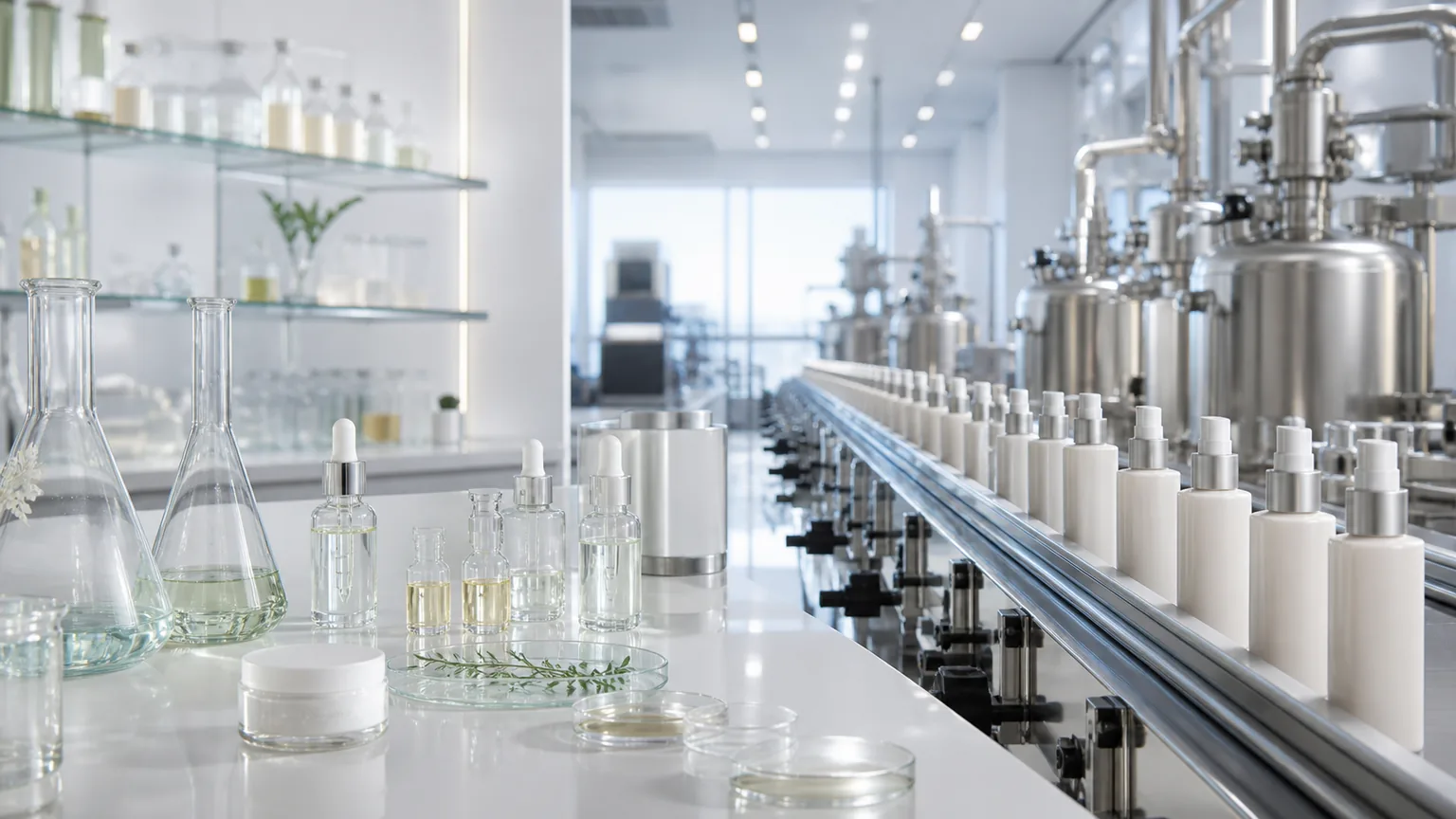
Kolmar Korea and COSMAX are Korean cosmetics ODM companies. They help brands develop formulas, test products, manage manufacturing and produce finished cosmetics while the consumer-facing brand builds its market identity.
This manufacturing layer matters because K-beauty is moving at export scale. South Korea’s Ministry of Food and Drug Safety reported that cosmetics exports reached $7.0 billion in the first half of 2026, the country’s highest first-half total. That figure describes the whole export sector, not the sales of any single manufacturer, but it shows the production and compliance load behind global demand.
What does a K-beauty ODM company do?
A cosmetics ODM develops or proposes a product, then manufactures it for sale under a client’s brand. An OEM mainly produces to a specification supplied by the client.
Kolmar Korea’s official ODM description covers market research, trend analysis, planning, development, manufacturing, management and shipment. COSMAX describes its ODM service as fully developed, formulated and manufactured beauty products supplied without consumer branding. Both descriptions place research before the production line.
| Decision point | OEM | ODM |
|---|---|---|
| Product starting point | The brand brings the product design or detailed specification. | The manufacturer can propose or develop the formula and technical route. |
| Manufacturer’s role | Production, quality control and delivery to the agreed specification. | Development work plus production, with the scope defined by contract. |
| Brand’s role | Technical direction, brand identity, distribution and sales. | Product brief, audience, brand identity, distribution and sales. |
| What the label shows | The consumer sees the market-facing brand. Manufacturer, responsible seller or importer details vary by market and package. | |
ODM is useful because it gives a brand access to an existing technical organization. It doesn’t mean every product comes from a public formula menu, nor does it tell us who owns a specific formula. Those details are often confidential and contract-specific.
How do Kolmar Korea and COSMAX compare?
Both companies connect research with large-scale production, but their public materials describe different service menus and manufacturing footprints. A fair comparison should stay within those disclosed facts.
| Company | Officially described role | Publicly described scope |
|---|---|---|
| Kolmar Korea | Kolmar Korea says it introduced the cosmetics ODM model in Korea. | Its total consulting model runs from market and trend research through planning, development, manufacturing, management and shipment. Its quality page lists CGMP and ISO systems among its manufacturing and laboratory credentials. |
| COSMAX | COSMAX presents ODM as developed, formulated and manufactured products without the branding, and separately offers a broader OBM service. | COSMAX’s official manufacturing page lists facilities in Korea, China, the United States, Indonesia and Thailand. |
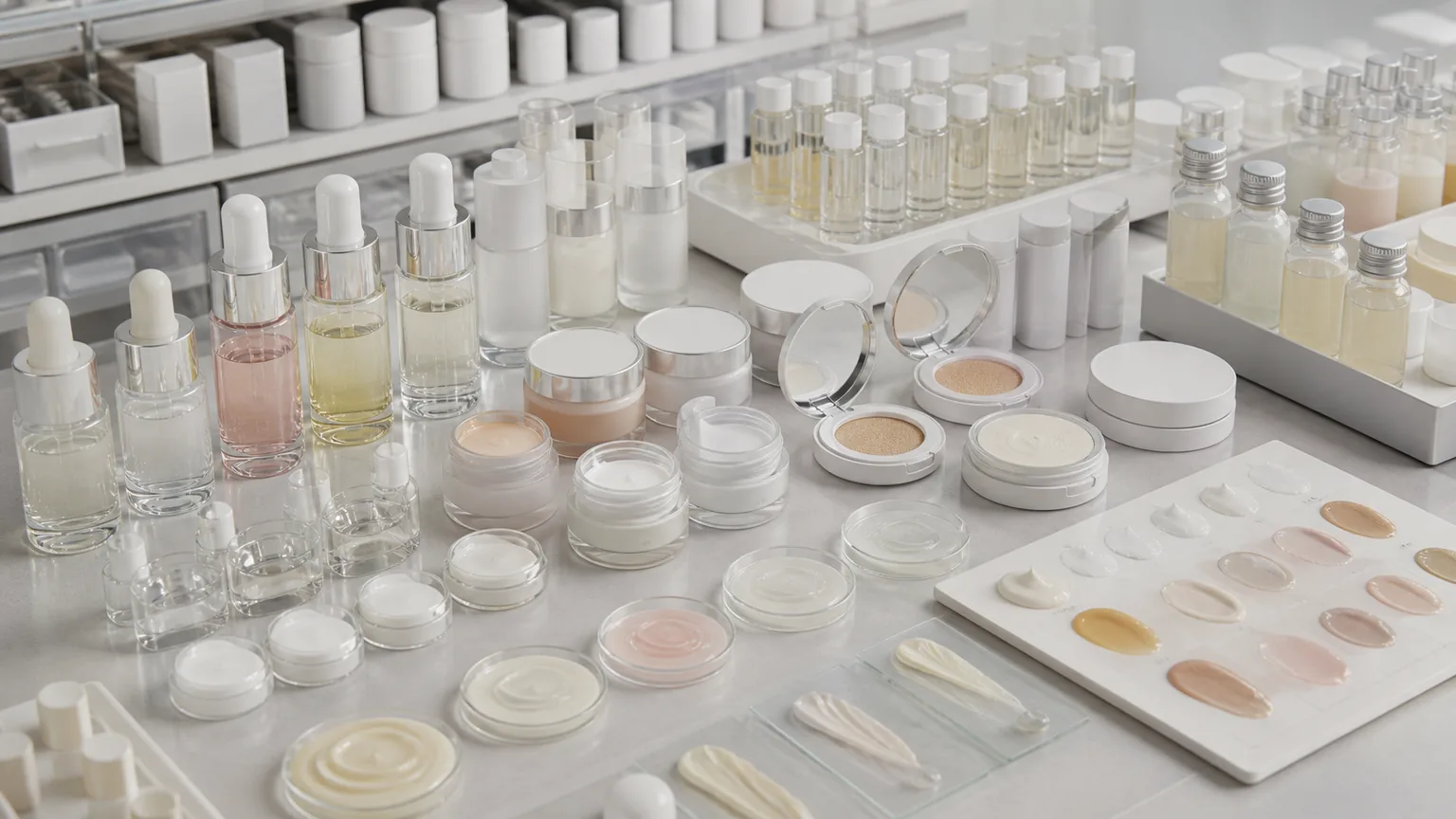
The comparison does not establish that one manufacturer made a particular product. Brands and ODM companies do not always disclose customer relationships, and a factory name alone cannot reveal a formula, test standard or commercial agreement.
What did the second quarter of 2026 show?
Kolmar Korea and COSMAX both reported their highest-ever quarterly sales and operating profit in the second quarter of 2026. The results give a current measure of the business flowing through Korea’s ODM layer, although they do not reveal which manufacturer made any individual product.
According to results reported by the Chosun Daily on August 12, 2026, Kolmar Korea’s consolidated sales reached KRW 861.3 billion, up 17.9% from a year earlier, while operating profit rose 50.2% to KRW 110.3 billion. COSMAX reported consolidated sales of KRW 794.9 billion, up 27%, and operating profit of KRW 73.7 billion, up 21%.
| Q2 2026 | Kolmar Korea | COSMAX |
|---|---|---|
| Consolidated sales | KRW 861.3 billion, up 17.9% year on year | KRW 794.9 billion, up 27% year on year |
| Operating profit | KRW 110.3 billion, up 50.2% | KRW 73.7 billion, up 21% |
| Korean business | Sales of KRW 430.4 billion, up 31.2%; operating profit of KRW 70.8 billion, up 44.3% | Sales of KRW 518.4 billion, up 23% and above KRW 500 billion for the first time in a quarter; operating profit of KRW 56.4 billion, up 13% |
The regional picture was not uniformly strong. Kolmar Korea’s China sales rose 15.9% to KRW 57.9 billion, but operating profit there fell 6.3%, and sales at its U.S. and Canadian subsidiaries declined. COSMAX said its U.S. subsidiary turned profitable for the first time after consolidating two factories into one and receiving more orders from Western indie brands. That mix is a useful reminder: record group results show demand and execution at scale, not identical performance in every market.
Why does ODM matter when K-beauty exports grow?
Export growth increases the work around a cosmetic product: stable production, documentation, market-specific labeling and regulatory coordination all have to keep pace with demand.
TrendKorea’s earlier coverage of South Korea’s 2025 cosmetics export record shows the scale of the market shift. Our look at the rise of K-beauty indie brands covers the consumer-facing side. ODM infrastructure is one way smaller brand organizations can gain access to research and production capacity without building every technical function internally.
Formula and process
Researchers translate a product brief into a formula, compatible packaging and a repeatable manufacturing process.
Quality records
Testing, batch controls and manufacturing records make it possible to investigate problems and reproduce an approved product.
Market coordination
Technical files and production information must match the obligations of the responsible company in each destination market.
The legal duties do not disappear when a brand hires an ODM. In the United States, the FDA’s MoCRA guidance assigns facility registration to manufacturers and processors, while the responsible person lists each marketed cosmetic product. In the European Union, the Cosmetic Products Notification Portal receives product information from responsible persons and, in some cases, distributors. An ODM can support the technical work, but the responsible brand, importer or distributor still needs to understand its own obligations.
What can shoppers learn from the package?
A package can identify the companies responsible for selling, importing or manufacturing a cosmetic. That information adds context, but it cannot prove that two products share a formula or perform the same way.
- Separate the roles. Look for the brand owner, responsible seller or importer, and manufacturer when the market’s label includes them.
- Do not infer a shared formula. One ODM can manufacture different specifications for different clients.
- Read the full product evidence. Ingredient list, directions, warnings, packaging and the brand’s test information matter alongside the manufacturer’s name.
- Treat registration claims carefully. The FDA states that cosmetic facility registration and product listing are not product approval programs or promotional certificates.
The manufacturer’s identity can tell you who had production responsibility. It does not show whether a product suits your skin, substantiate every marketing claim or replace patch testing when irritation is a concern.
K-beauty manufacturing FAQ
What does ODM mean in Korean cosmetics?
ODM means original development manufacturing or original design manufacturing, depending on the company’s English usage. The manufacturer contributes product development and then produces the finished cosmetic for a client brand.
Does the same manufacturer mean the same formula?
No. A shared manufacturer does not establish a shared formula. Clients can request different ingredients, textures, packaging, tests and performance specifications.
Do Kolmar Korea and COSMAX own the brands they manufacture?
ODM manufacturing and consumer-brand ownership are separate roles. A company may also offer broader brand-development services, but ownership and formula rights depend on the specific agreement and should not be assumed from a factory name.
On the next K-beauty package you pick up, note the brand, responsible seller or importer, and manufacturer when they are listed. Each name explains a different part of how the product reached the shelf.