A three-day beach festival is the immediate reason to go. The more useful reason is that Sokcho makes it easy to see how an East Coast holiday, a city beach, and a distinctly Korean summer routine fit together.
Sokcho’s summer appeal is not that it offers a secret beach. It is that a city beach can be both remarkably accessible and unapologetically social. From July 31 to August 2, 2026, Sokcho Beach will host the Sokcho Summer Festival: an evening-facing program of beach music, dance, water play, retro games, local food stalls, and hands-on activities. The event is free, according to the Ministry of Culture, Sports and Tourism listing. For an overseas visitor, though, the festival is best treated as an entry point—not the entire itinerary.
That distinction matters. A current festival can make a destination feel urgent, but it can also reduce it to a stage and a timetable. Sokcho rewards a wider frame. The beach is close to the express-bus terminal; a pine-lined coastal walk begins nearby; the city’s food market and Abai Village carry a different layer of local history. These elements let a visitor move between the crowd and the quieter edges without pretending that the busiest weekend of the season will be serene.
The article’s practical premise is simple: go to the festival for the shared energy, then use the surrounding coast to understand why this compact city beach is a familiar summer destination for Koreans. Confirm any last-minute program changes directly with the Sokcho city website before leaving, because outdoor schedules and access conditions can change.
The timely hookWhat the festival adds to an ordinary beach day
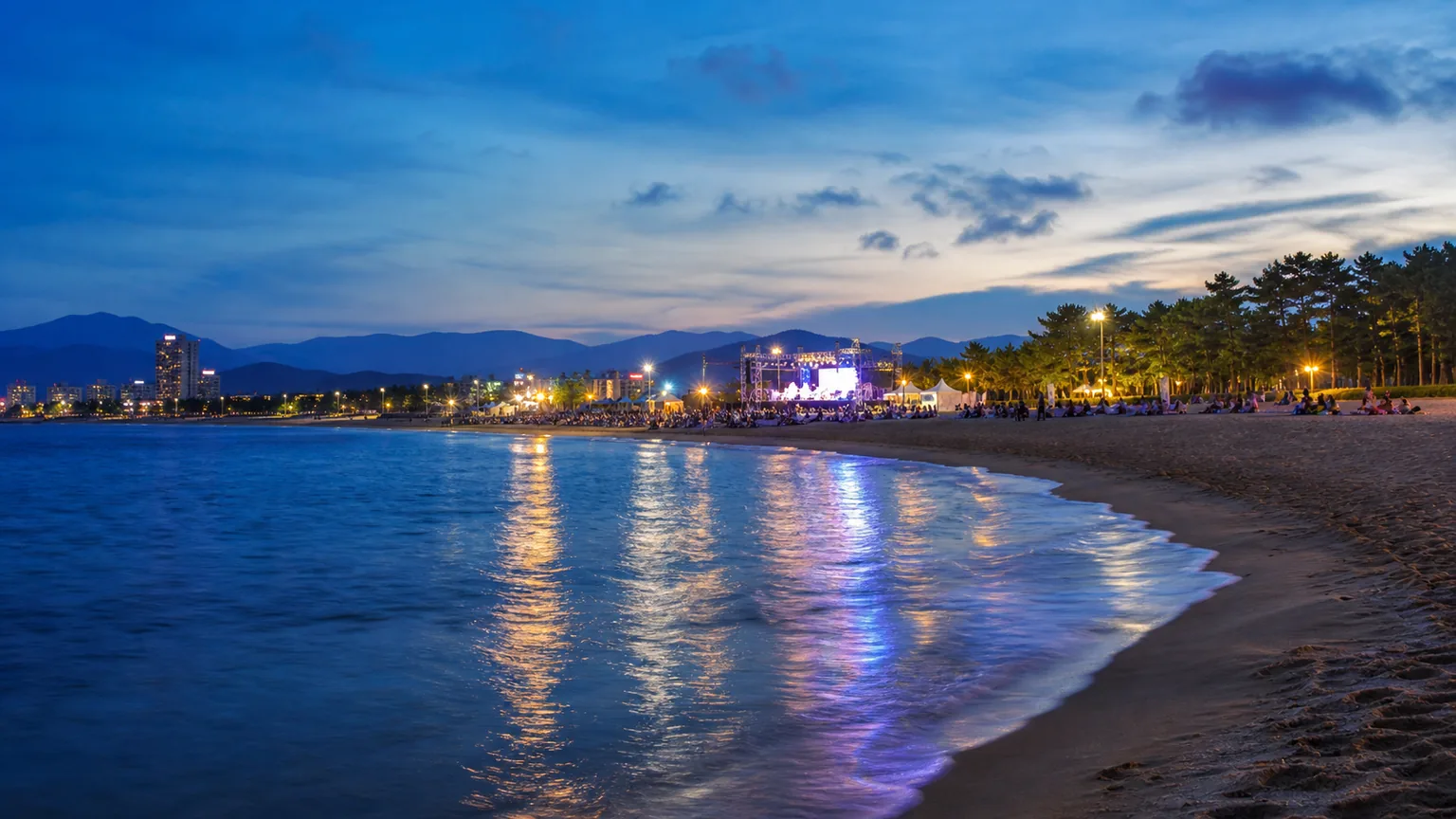
The 2026 program is built around a beach setting rather than a ticketed indoor venue. The ministry listing names the retro-game event Reply Arcade, the water-gun survival activity Summer Splash Water Run, local dance programming, Beach Sound performances, a DJ event, free fan- and pinwheel-making activities, and a local food-and-drink market. It lists Sokcho Beach as the venue and 4:00–9:00 p.m. as the operating window. Those details explain the appeal: the festival creates a reason to arrive in the late afternoon, when the beach changes from swimming ground to public evening space.
This is a useful cultural distinction for first-time visitors. Korean beach culture in high summer often has a strong collective rhythm: people arrive in groups, rent or carry beach gear, eat nearby, photograph the setting, and stay into the evening when an event is on. It is not a promise of an empty coastline. The social density is part of the experience. If that sounds appealing, build your day around it; if it does not, use the festival as a short evening stop and give the morning to the trail or market instead.
A Korean beach weekend is often less about escaping other people than about choosing the right moment to join them.
BackgroundWhy Sokcho Beach works as a city beach
VISITKOREA says Sokcho Beach opened in 1976 and sits close to downtown, with the express-bus terminal within walking distance. That relationship is more important than it sounds. The beach is not an isolated resort reached only by a private shuttle or a rental car; it is part of the city’s everyday geography. Behind the shore are a pine grove, a small park, walking paths, restaurants, and photo-oriented public art. The city’s beach designation page records a 940-metre stretch of sand, which helps explain why it can absorb both a festival audience and ordinary summer visitors.
Its accessibility also changes the character of a visit. You can arrive by intercity bus, leave luggage at your accommodation, and walk to the water rather than spending the day navigating a resort complex. That ease is attractive in a country where a short domestic break often has to fit tightly around work, school, and weekend traffic. It is also why the beach can feel crowded in July and August. The right response is not to expect a private cove; it is to plan around the city’s convenient density.
Current beach facts to plan around
The Sokcho city beach-operations page lists the 2026 season for Sokcho Beach as July 3–August 23. It lists normal swimming hours as 9:00 a.m.–6:00 p.m.; during the stated night-opening period, swimming is listed through 9:00 p.m. The beach itself operates longer than swimming hours. Treat these as operational limits, not suggestions, and check the city page again on the day for weather or control notices.
ExperienceTurn the festival into a coastal itinerary
A productive first day begins before the headline event. Start at Sokcho Beach in the morning, when the sand and pine path make more sense as a place rather than a backdrop. The city lists restrooms, shower/changing facilities, foot-wash stations, lockers, rental shops, and parking in its current beach information. Availability can change with operating conditions, so take only what you need, protect electronics from water and sand, and do not assume that every facility is free.
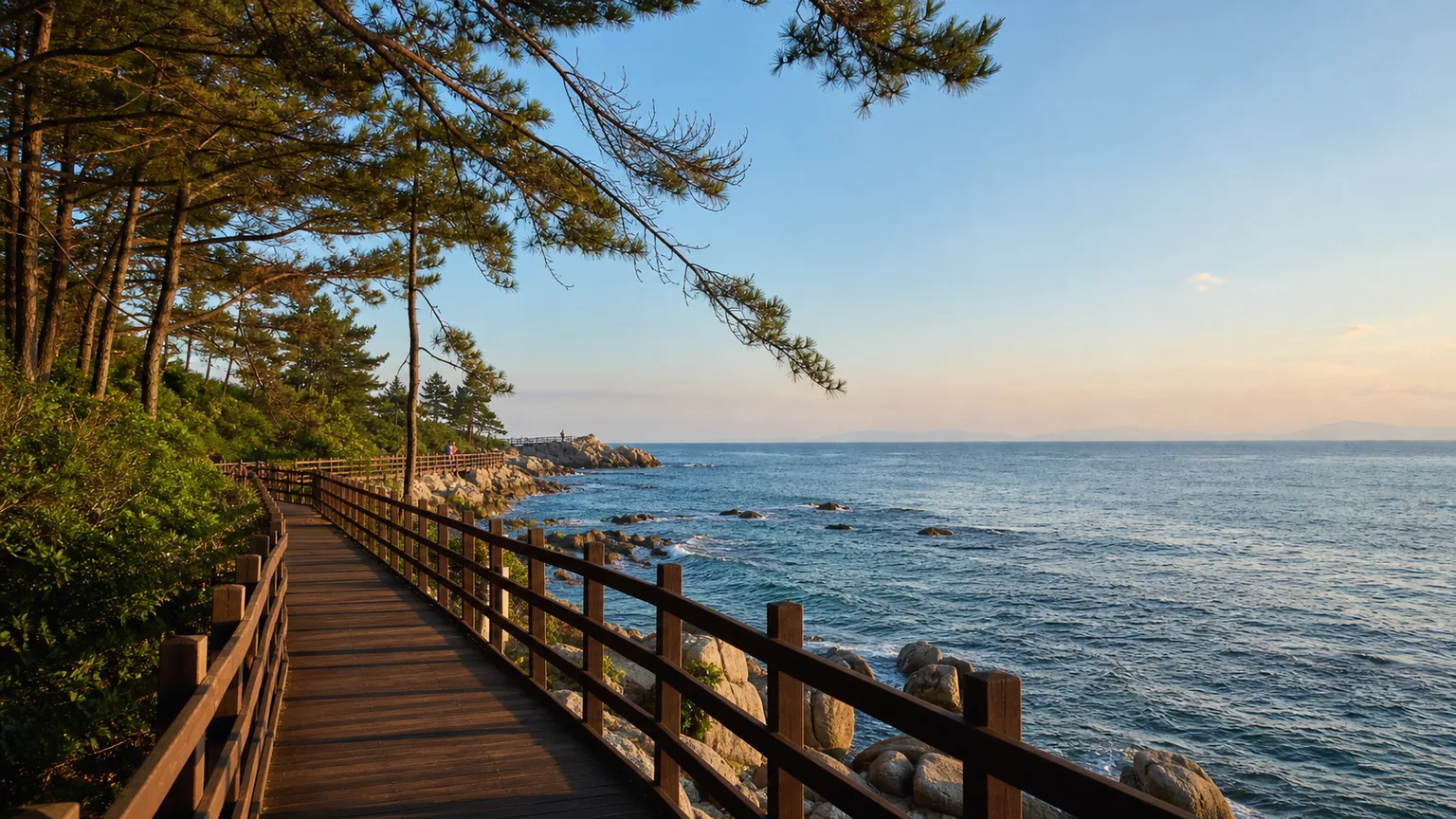
In the later afternoon, walk south toward Oeongchi Badahyanggiro. The Korea Tourism Organization describes it as a 1.74-kilometre coastal route from Sokcho Beach to Oeongchi Port, divided between a beach section and a more dramatic Oeongchi section. The latter had been restricted from civilian access for decades, a small but meaningful reminder that coastlines here can carry histories beyond tourism. Walk it for the landscape, but do not turn that history into a photo prop; stay on the established path and follow any local access notices.
For dinner, the useful next stop is downtown rather than another beachside queue. The Sokcho Tourism and Fisheries Market guide notes that shop hours vary and places the market within walking distance of the intercity terminal. It also explains why nearby Abai Village is culturally significant: refugees from Hamgyeong-do settled there during the Korean War, and foods such as Hamheung-style cold noodles and pollack sashimi salad remain associated with that history. This is the more substantial link between travel and place: not “eat a famous thing,” but understand how displacement shaped a city’s food memory.
Logistics and etiquetteBe a good guest on a busy beach
The most important behaviour issue at Sokcho Beach is not obscure etiquette; it is safety and shared-space discipline. The city specifically instructs users to stay within the designated swimming-limit buoys, obey swimming-hour and weather-related controls, and follow staff direction. It also prohibits littering, camping or cooking on the sand, damaging the pine grove, using fireworks, and bringing pets into the designated beach area. These are not decorative rules. A packed summer beach only works when the public space remains usable for the people arriving after you.
The practical solution is straightforward. Swim only when and where the beach is open, keep music and group belongings compact, sort and remove rubbish, and ask before occupying a neighbouring group’s space with a camera or picnic setup. If the water is closed, do not treat a calm-looking sea as permission to enter. A redirection from staff is normal crowd management, not a personal rebuke. This attitude also helps with the festival: queues, security checks, and changing programme access are easier when visitors assume that local safety instructions take priority over their planned photo or performance time.
Budgeting needs the same restraint. The festival itself is listed as free, but transport, food, equipment rental, lockers, accommodation, and any private attraction are separate expenses. Prices and bookings are volatile in peak season, so this is not the place to quote a guessed daily total. Reserve accommodation and any paid tickets through the operator, keep a flexible meal plan, and verify public-transport departure times with the carrier. The beach’s proximity to the express-bus terminal makes it convenient, but it does not guarantee empty seats on a summer weekend.
The point of the tripSee the festival as a lens, not a checklist
Sokcho’s summer festival is a good current reason to travel, but its stronger value is that it makes the city’s normal connections visible. A beach opened as urban infrastructure in 1976 now sits beside a bus terminal, a pine walk, a recently accessible coastal trail, and a food landscape shaped partly by postwar resettlement. That is a more original travel story than a list of activities because it explains why a single evening event can feel so rooted in a place.
For foreign visitors, the most useful choice is to decide which version of Sokcho you want: a lively Friday-or-Saturday-night beach, a daylight coastal walk, a food-focused downtown stop, or a combination with enough time between each. The festival supplies energy. The surrounding city supplies context. Plan for both, and you will leave with more than a photo of the stage.