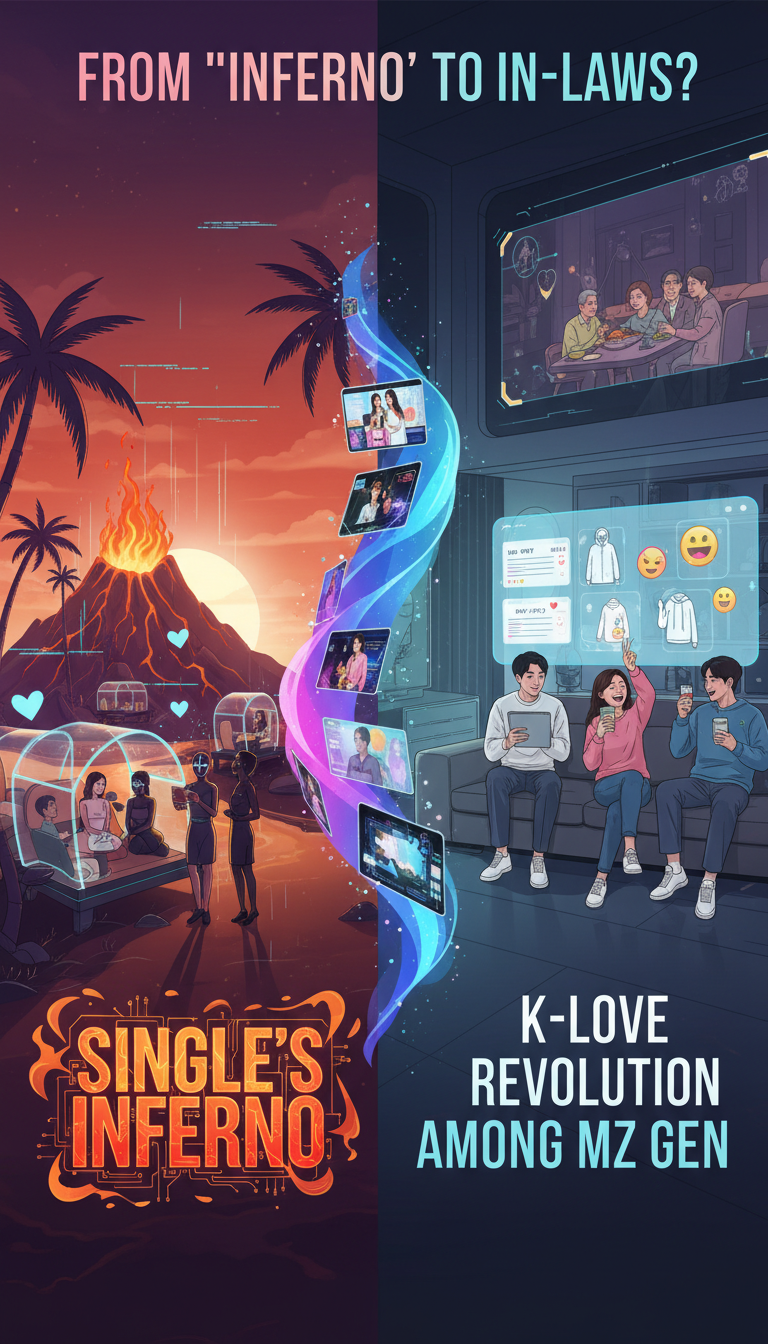
From 'Inferno' to In-Laws? How 'Single's Inferno' Sparked a K-Love Revolution Among MZ Gen
Escape to Paradise – Or Just Your Couch?
Remember when dating was just, well, dating? Before the algorithms, the influencers, the curated profiles? Then Single's Inferno crash-landed onto our screens, transforming a deserted island into a global obsession, a shimmering mirage of sun-kissed skin and simmering tensions. But beyond the beach bodies and manufactured drama, this fiery Netflix show became something more profound: a reflection, perhaps even a subtle shaper, of the wild and ever-evolving world of dating for Korea's MZ generation (that potent cocktail of Millennials and Gen Z). We're talking about a world where stranded singles sweat it out in an 'Inferno' devoid of luxuries, all vying for a coveted ticket to 'Paradise,' a land flowing with champagne and (presumably) slightly less awkward conversations. All for love? Or, let's be honest, for a fleeting brush with internet fame?
Before the Inferno: A History of Korean TV Romance
To truly understand the Inferno's impact, we need a quick rewind. This isn't Korea's first tango with televised romance. The seeds were sown long ago. Think back to the innocent days of the 1970s, where televised matchmakers played Cupid with a folksy charm. But the real tectonic shift occurred in '94 with MBC's Love's Studio, a show so successful it reportedly led to a staggering 47 marriages! The early 2000s then ushered in an era of celebrity-driven matchmaking, with shows like Match Made in Heaven and Love Letter leveraging star power to ignite sparks (or at least create good television).
Then came the rise of "realness," or at least the carefully constructed illusion of it. Jjak (2011-14) dared to venture into the realm of non-celebrity observational dating, paving the way for a more relatable (though often cringeworthy) viewing experience. But it was Heart Signal that truly laid the groundwork for Single's Inferno's success. Gone were the intrusive hosts, replaced by a panel of commentators dissecting every furtive glance, every awkward silence, every subtle gesture. Sound familiar? Heart Signal was the blueprint, the silent architect of the dating show phenomenon we see today.
The MZ Love Code: Decoding Dating in 2025
So, who are these MZers whose hearts are supposedly set aflutter by sun-renched singles on a deserted island? They are the digital natives, the self-starters, the generation that prizes authenticity above all else. They value mental well-being and financial stability, sometimes placing them above the siren song of traditional romance.
While dating apps remain a staple (a whopping 74% still use them!), Gen Z often finds them… well, a bit "fake." There's a growing yearning for genuine connection, a desire for inerson interactions, albeit with the curated filtering they've grown accustomed to online. Think offline events, but with an app-like layer of pre-selection.
And then there's the MBTI obsession. This isn't just a personality quirk; it's practically a dating requirement. A staggering 92% of 20-somethings proudly display their MBTI type on their profiles. It's the ultimate dating cheat code, promising instant compatibility (or at least a convenient excuse for incompatibility).
Communication is paramount, with 47% declaring it the most crucial factor in a relationship. No mind games, please. Openness and honesty are the watchwords. Before diving into the deep end of a relationship, there's the crucial "some" phase, that sweet, ambiguous period of pre-dating exploration (ideally lasting 2-weeks) before the official "gobaek" (confession) that seals the deal.
Couple culture is alive and well, albeit with its own unique quirks. Matching outfits, celebrating every 14th of the month, constant texting – these are all signs of affection, not clinginess. Public displays of affection, however? Still a bit of a no-no.
But here's the rub: love is increasingly viewed as a choice, not a necessity. High living costs, a relentless focus on self-development, and a fear of emotional and financial drain mean that many MZers prioritize hobbies, careers, and personal growth over the perceived burdens of a relationship. Efficiency and "zero risk" are the new romantic ideals.
Enter Single's Inferno, offering the ultimate form of vicarious romance: "watching love" (보는 연애). Why endure the messy realities of dating when you can observe others navigating the treacherous waters of attraction, rejection, and manufactured drama? It fulfills innate desires, appeals to universal emotions, and offers the titillation of a melodrama without any personal risk. It ignites memes, fuels fandoms, and elicits deep emotional investment (though it's worth noting that a significant chunk of MZ just couldn't care less about dating shows).
Beneath the Palm Trees: 'Single's Inferno's' Sticky Controversies
But beneath the shimmering surface of sun-renched romance lie some troubling undercurrents. Single's Inferno hasn't been without its share of controversies. The beauty standards blunder in Season 1, with its tone-deaf comments about skin tone, rightly drew the ire of international viewers, exposing Korea's often narrow and unforgiving beauty ideals.
Then there's the perennial debate: Is it real, or is it scripted? Are contestants genuinely searching for love, or simply angling for a career boost and a surge in social media followers? The line between reality and carefully constructed narrative gets blurrier with each passing season.
Season 3, in particular, served up a buffet of cringe-worthy moments. Kim Gyu-ri's dismissive "wouldn't even take it" comment was a masterclass in awkwardness. Lee Gwan-hee's "that one, this one, that one" approach to romance was… well, let's just say it didn't win him any fans. And the MCs, while often providing "relatable" commentary, sometimes veered into harsh territory.
Let's not forget the "evil editing" allegations, the accusations that producers manipulate footage to create drama and villainize contestants, all in the name of a compelling narrative. These controversies, while often dismissed as mere entertainment fodder, spark important conversations about media ethics, authenticity, and the pervasive societal beauty pressures that continue to plague Korea.
The Future of Love Island (Korean Edition): What's Next?
Despite the controversies, Single's Inferno isn't going anywhere. Season 4 has just wrapped, and Season 5 is already slated for January 2026. The global appetite for K-dating shows is undeniably real. But the landscape is shifting. A new wave of K-dating shows is emerging, many of them directly addressing the concerns and preferences of the MZ generation, as well as criticisms leveled against SI.
Netflix's Single Since Birth (Motae Solo) aims for genuine relatability by featuring contestants who are, quite literally, dating newbies. Transit Love (now in its fourth season with Another Beginning) continues to mine the dramatic potential of ex-couples trying to rekindle old flames or move on once and for all. Heart Pairing, from the creators of Heart Signal, takes a more serious approach, focusing on finding a life partner. My Children's Romance introduces a new level of pressure by having parents watch their kids navigate the dating world from a studio. And for those with limited attention spans, there are options like 60 Minutes to Love (quick blind dates) and We're Still Single (former baseball players seeking love).
The evolving landscape suggests a growing emphasis on authenticity, emotional depth, shared values, and personal growth. Perhaps we'll even see shows that tackle the economic realities of modern relationships or explore innovative blends of online and offline dating styles.
Love in the Digital Age – A Spectator Sport?
Single's Inferno, for all its flaws and manufactured drama, serves as a fascinating lens through which to examine how Korea's MZ generation thinks about love, from the quasi-scientific allure of MBTI compatibility to the voyeuristic pleasure of "watching love" from afar.
The quest for connection, for intimacy, for belonging, remains a fundamental human drive. But the methods we use to pursue those connections, and the expectations we place upon them, are constantly being reshaped by technology, societal pressures, and the ever-shifting sands of cultural norms.
Whether you're braving the Inferno yourself or simply enjoying the spectacle from the comfort of your couch, one thing is certain: K-love on screen is here to stay, and it's only getting wilder, more diverse, and more reflective of the complex realities of love in the digital age. Is it a spectator sport? Perhaps. But it's a spectator sport that holds up a mirror to our own desires, anxieties, and ever-evolving understanding of what it means to connect in a world that is both hyper-connected and increasingly isolating.