K-Beauty Goes Global: What's Really Happening in 2026
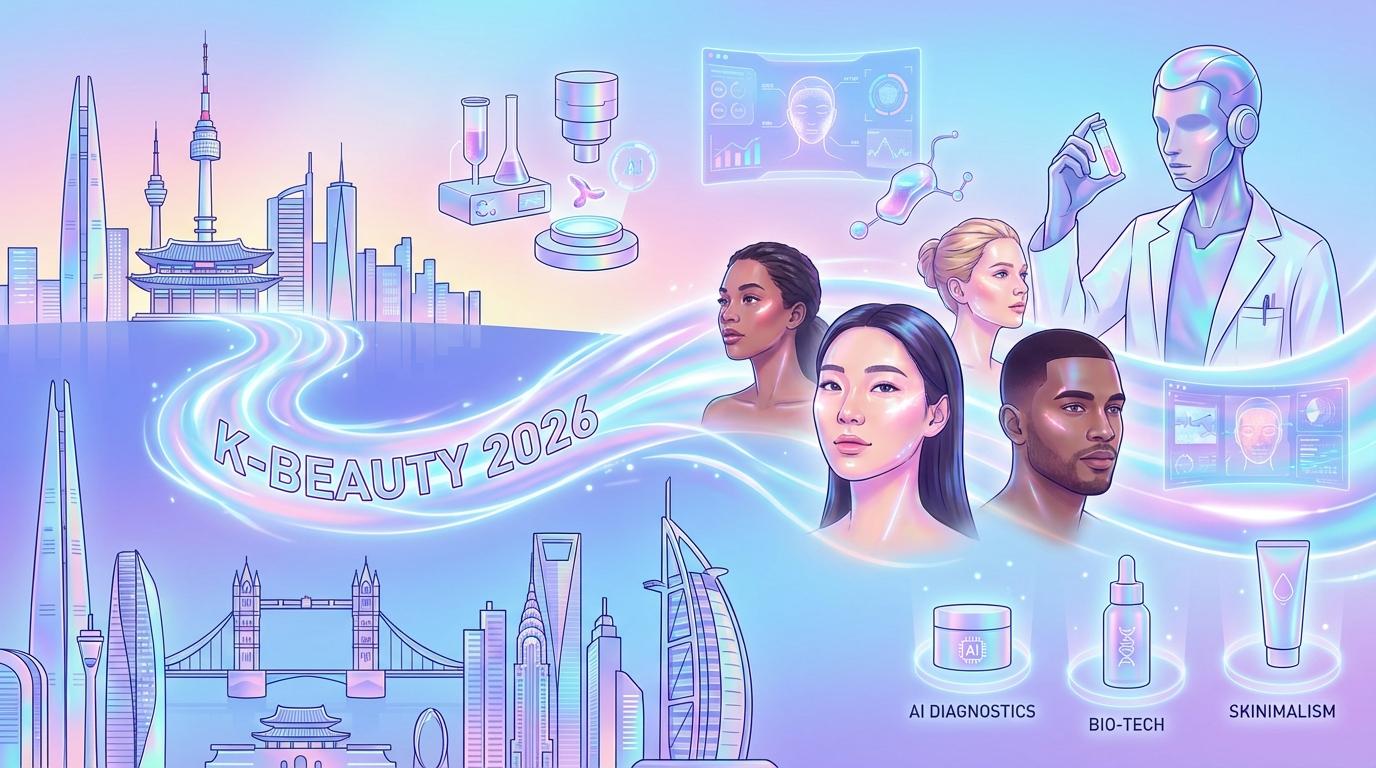
Remember when "glass skin" was just a weird TikTok trend? Yeah, those days are long gone. What started in Seoul's skincare shops has somehow turned into a $187 billion industry that's completely reshaping how we think about beauty. And honestly, it's not just about the cute packaging anymore.
By 2026, K-Beauty isn't trying to prove itself—it's the benchmark everyone else is measured against. The shift from "trendy import" to "global standard" happened faster than most of us realized. This is about real science meeting cultural influence in a way that's actually changing the game.
What You Need to Know
Here's what's actually driving the market right now:
Science is finally beating hype. We're in what people are calling "K-Beauty 3.0"—think bio-tech ingredients like PDRN and exosomes instead of just pretty sheet masks. These aren't marketing buzzwords; they're actual medical-grade ingredients making their way into everyday products.
The 10-step routine is dead (sort of). "Skinimalism 2.0" is what everyone's talking about now. It's not about doing less for the sake of it—it's about smarter, more efficient formulas that actually work. People want results without spending 45 minutes in the bathroom every night.
K-Beauty is going places it's never been before. The UK, India, and the Middle East are seeing massive growth, especially with Halal-certified products entering the market. It turns out Korean skincare philosophy translates really well across cultures when companies actually put in the effort.
So What Actually Is K-Beauty 3.0?
Look, if K-Beauty 1.0 was BB creams and cute packaging, and 2.0 was the sheet mask explosion, then 3.0 is a whole different animal. We're talking about actual biological intervention.
Korean labs are running circles around Western "derma" brands by bringing in ingredients that sound like they belong in a hospital—PDRN (it's derived from salmon DNA, don't ask) and exosomes that literally tell your skin cells what to do. And they're not keeping this stuff in $500 serums. These ingredients are showing up in products regular people can actually afford.
The shift is pretty wild when you think about it. We went from "let's prevent wrinkles" to "let's repair your skin at the cellular level" in the span of a few years. Korean R&D cycles are just faster—they're getting medical-grade innovations into consumer products years before anyone else even starts clinical trials.
Why $187 Billion Matters
The global market's projected to hit $187.4 billion by 2030, and 2026 is where things really start accelerating. But the numbers aren't even the most interesting part—it's why this is happening now.
People are exhausted. Not just with life (though that too), but with their entire skincare routine. We're seeing a mass exodus from those labor-intensive 10-step routines. The "barrier-first" approach is taking over—treating your face like the delicate ecosystem it actually is instead of something you need to scrub into submission.
Skincare is focusing on the microbiome now. Think probiotics and prebiotics for your face. You're not just slapping on moisturizer anymore; you're feeding your skin the stuff it needs to do its job properly.
From 10 Steps to AI (Because Of Course)
K-Beauty rode the Hallyu wave hard. K-Pop and K-Dramas made the "K-Glow" something everyone wanted. But 2026's adding some serious tech to that aesthetic dream.
We're way past one-size-fits-all. AI-powered skin analysis is becoming standard. There are apps now that don't just tell you if you have oily skin—they analyze your daily environment (pollution, UV, humidity, everything) and recommend customized formulas. A teenager in London and a professional in Dubai can get the same level of personalized care that used to require expensive consultations in Gangnam clinics.
It's democratizing dermatology in a way that feels kind of revolutionary, honestly.
The Messy Parts Nobody's Talking About
Let's be real—it's not all perfect. The Clean Beauty debate is getting intense. K-Beauty mastered the formula game, but all that elaborate packaging? It's becoming a problem. The pressure to shift toward refillable containers and waterless formulations isn't just good PR anymore—it's survival.
Then there's TikTok Shop and the counterfeit nightmare. As K-Beauty brands get more valuable, the knock-offs multiply. It's a minefield out there.
And we need to talk about inclusivity. For years, K-Beauty got hammered for limited shade ranges. The brands winning globally in 2026 are the ones that figured out the Korean aesthetic isn't about one skin tone—it's about light and texture. When they expanded their ranges to actually serve diverse skin tones, that's when things really took off.
What's Coming Next
Beauty is going internal — The line between supplements and skincare is completely blurred now. Collagen drinks and beauty supplements aren't extras anymore; they're foundational. You can't out-serum a bad diet, turns out.
Scalp care is the new skincare — This "skinification" of hair care is wild. The same hyaluronic acids and exosomes in your facial serums? They're going on scalps now for hair follicle health. Makes sense when you think about it, but it's still weird to see.
The Middle East is the next frontier — This might be the smartest expansion move. By developing vegan and Halal-certified products, K-Beauty is tapping into markets that value both cutting-edge science and ethical/religious compliance. It's not just throwing products at a wall; it's actually adapting.
Quick Questions People Keep Asking
Is the 10-step routine actually dead?
Not dead, but evolved. The layering philosophy is still there—people just condensed it. Most moved to 3-5 high-impact products that do multiple things instead of 10 single-purpose ones. Same results, less time.
What the hell is PDRN and why is it everywhere?
It's DNA-derived (often from salmon, yeah) and Korean hospitals have used it for wound healing for years. In skincare, it's incredibly good at tissue repair and boosting elasticity—way more effective than traditional anti-aging ingredients. Hence why it's suddenly in everything.
Are K-Beauty products actually sustainable?
They're getting there. Major brands pivoted hard toward biodegradable packaging and waterless formulations to meet European and North American eco-standards. It's a work in progress, but the pressure's real and the changes are happening.
K-Beauty isn't a trend anymore. It's the standard. It's that rare moment where cultural influence and legitimate science came together perfectly. Whether you're still doing the full ritual or you've gone minimal with strategic products, Korean skincare has probably influenced your routine more than you realize.
The question isn't whether K-Beauty will keep growing—it's how fast everyone else can catch up.