South Korea Prosecution Demands Death Penalty for Yoon Suk-yeol: Inside the Historic Insurrection Trial
South Korea stands at a historic crossroads as prosecutors officially seek the death penalty for former President Yoon Suk-yeol. Accused of being the 'ringleader of an insurrection,' Yoon faces a legal battle that threatens the very core of the nation's democratic framework. This unprecedented move is not just a trial; it is a profound national reckoning that echoes the country’s turbulent history with power and justice. From the specific legal charges of treason to the haunting specter of past dictators, here is everything you need to know about the case that has sent shockwaves across the globe.
Key Takeaways
Historic Demand: A special counsel has formally requested the death penalty for former President Yoon Suk-yeol on charges of insurrection, a demand made for only the second time in South Korean history against a former head of state.
De Facto Abolitionist State: Despite this stark prosecutorial demand, South Korea operates under an unofficial moratorium on executions, a practice suspended since 1997, which classifies it internationally as a de facto abolitionist state.
Reigniting Debate: This high-profile case has violently thrust a long-dormant, yet deeply felt, national and international debate over the morality, legality, and practical application of capital punishment back into the public square.
The Essentials: Unpacking the Charges Against Yoon Suk-yeol
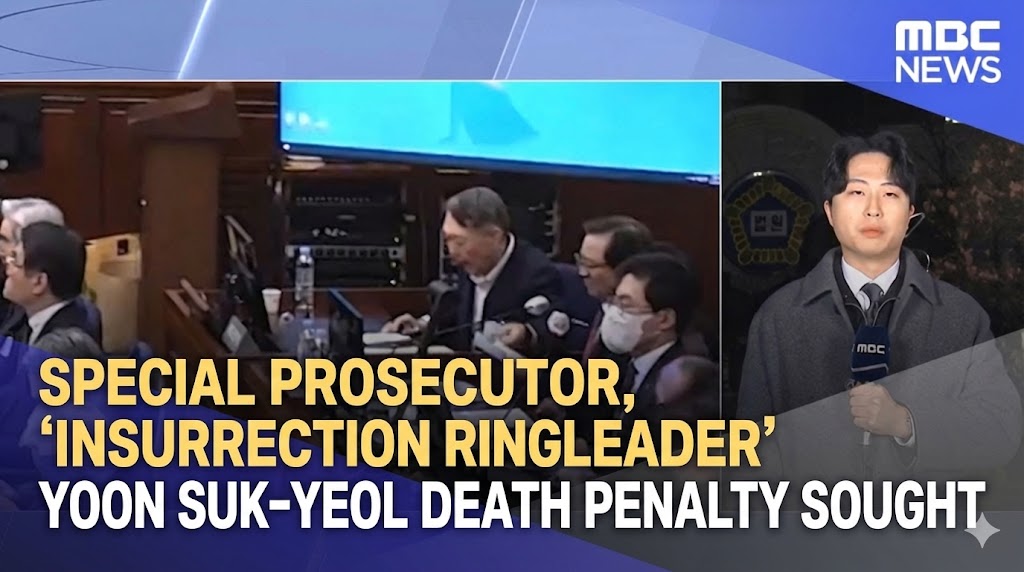
The event that set this course in motion occurred on January 13, 2026. On that day, a special counsel team, helmed by Chief Special Prosecutor Cho Eun-seok, made a formal and chilling request to the court: the death penalty for former President Yoon Suk-yeol. The core accusation is that of being the "ringleader of an insurrection" (내란 우두머리), a charge directly linked to his declaration of martial law on December 3, 2024.
In the eyes of the special counsel, Yoon’s actions represented a calculated gambit for absolute power rather than a mere lapse in political judgment. The prosecution's case rests on the premise that he systematically weaponized the nation’s security forces to dismantle political opposition and stifle dissent in the media. By framing Yoon’s conduct as a 'more heinous assault on the constitution' than even the era of Chun Doo-hwan, prosecutors underscored the unprecedented nature of the charges. The legal framework leaves no room for leniency; the charge of insurrectionary leadership carries the state’s harshest penalties: life imprisonment or the death penalty.
Why It Matters Today: A Nation Divided
In the court of law and public opinion, two irreconcilable narratives collide. Former President Yoon Suk-yeol has vehemently denied all charges. He frames his martial law decree not as an act of tyranny, but as a "desperate yet peaceful attempt" to navigate what he perceived as crippling obstruction from the opposition party, an action he maintains was within his constitutional powers.
The defense's arguments have failed to dampen the escalating political outcry. Both the Democratic Party of Korea and the Rebuilding Korea Party have voiced their firm support for the prosecution’s move, characterizing it as a 'just outcome.' They contend that Yoon’s actions were 'far more malicious' than those of former dictator Chun Doo-hwan. Meanwhile, the People Power Party has remained notably silent, a move widely interpreted as an attempt to distance itself from its former leader.
The legal community, meanwhile, offers a more tempered perspective. While acknowledging the gravity of the charges, experts are quick to point to South Korea's status as a de facto abolitionist state. The consensus is that a life sentence is the more probable outcome, citing historical precedent. There is also a palpable concern about the "martyr effect"—the notion that imposing a death sentence, even if unfulfilled, could transform Yoon into a political symbol for his supporters, thereby deepening national divisions. This case, therefore, is not just about one man's fate; it has become the crucible in which the long-standing national debate over capital punishment is being reignited.
The Evolution: South Korea's Complex History with Capital Punishment
To understand the present, one must look to the past. Capital punishment has a long and often brutal history on the Korean peninsula, stretching back to the Joseon period where public executions served as grim warnings. The first modern execution law was codified in 1895, but its most poignant precedents lie in the nation's democratic era.
The specter of Chun Doo-hwan looms large over these proceedings. In a move that echoes the landmark 1996 trial, prosecutors have once again sought the death penalty for a former leader on charges including treason and mutiny. He was initially sentenced to death, a sentence later commuted to life imprisonment before he was, remarkably, pardoned. His contemporary, Roh Tae-woo, received a lengthy prison term, which was also reduced and ultimately pardoned. It is this very history that the special counsel in Yoon's case seeks to rewrite. They explicitly call for a more severe condemnation, a clear judicial line in the sand meant to deter any future leader from contemplating such a disruption of constitutional order.
And yet, this call for the ultimate punishment exists within a curious paradox. While the death penalty remains legally enshrined, no execution has been carried out since 23 were conducted in December 1997. This unofficial moratorium, now lasting over 25 years, has led international observers to classify South Korea as a de facto abolitionist state. As of August 2023, 59 individuals languish on death row, their sentences a legal fiction in a system that will not carry them out.
The Debates & Controversies: Ethical, Legal, and International Scrutiny
The Yoon case has exposed the deep philosophical fissures in South Korean society regarding the death penalty.
On one side are the retentionists. Their arguments often appeal to a sense of social justice for heinous crimes, a belief in its deterrent effect, and the idea that it reflects a public sentiment that demands ultimate retribution. On the other are the abolitionists, who argue from a foundation of human dignity, highlighting the irreversible risk of wrongful conviction and the unproven efficacy of capital punishment as a deterrent. They point to its potential for political misuse—a charge that resonates powerfully in the current context—and increasingly advocate for "absolute life imprisonment without parole" as a viable and humane alternative.
This societal debate is mirrored within the judiciary itself. The Constitutional Court has twice upheld the death penalty as constitutional, first in 1996 (a 7-2 decision) and again in 2010 (a narrower 5-4 decision). The shrinking majority in the latter ruling signifies a growing internal dissent, a judicial conscience in flux. A third petition challenging its constitutionality is currently under review, its outcome uncertain. In the legislature, multiple bills to abolish capital punishment have been introduced over the years, but all have withered without passage.
Adding to the domestic pressure is a chorus of international criticism. Human rights bodies like the European Union and the United Nations consistently call for full abolition, citing fundamental human rights and the terrifying permanence of judicial error. It is a point of some irony that South Korea has supported a UN resolution for a moratorium on executions since 2020, even as it retains the practice in its own laws. Critics contend that capital punishment can create a dangerous illusion of crime resolution, distracting from the state's more fundamental responsibility for crime prevention and social welfare.
What’s Next? The Future of Justice in South Korea
The nation holds its breath as it awaits the verdict in Yoon Suk-yeol's case, expected in February 2026. The prevailing wisdom among legal experts is that a life sentence is the most likely outcome, a verdict that would punish the man without breaking the country's long-standing moratorium on executions.
The future of the death penalty itself may be decided elsewhere. The Constitutional Court's ongoing third review could prove pivotal. An abolition ruling would require a supermajority of six of the nine judges, a high but not impossible bar. Legislative reforms continue to be debated, including the formal introduction of "life imprisonment without parole" and a proposed law to remove the 30-year statute of limitations for carrying out a death sentence, a move that would make the sentences of those on death row effectively permanent. Public opinion remains a fluid and complex factor; while some polls show support for the death penalty in principle, a significant portion expresses deep reservations about its enforcement and would favor abolition if a suitable alternative were in place.