The Hangang Is Open. Your Festival Plan Might Not Be.
The useful distinction: a Hangang park can be a spontaneous afternoon; a festival programme has its own time, place, and participation instructions. Treating those as the same thing is how a seemingly easy Seoul evening becomes needlessly frustrating.
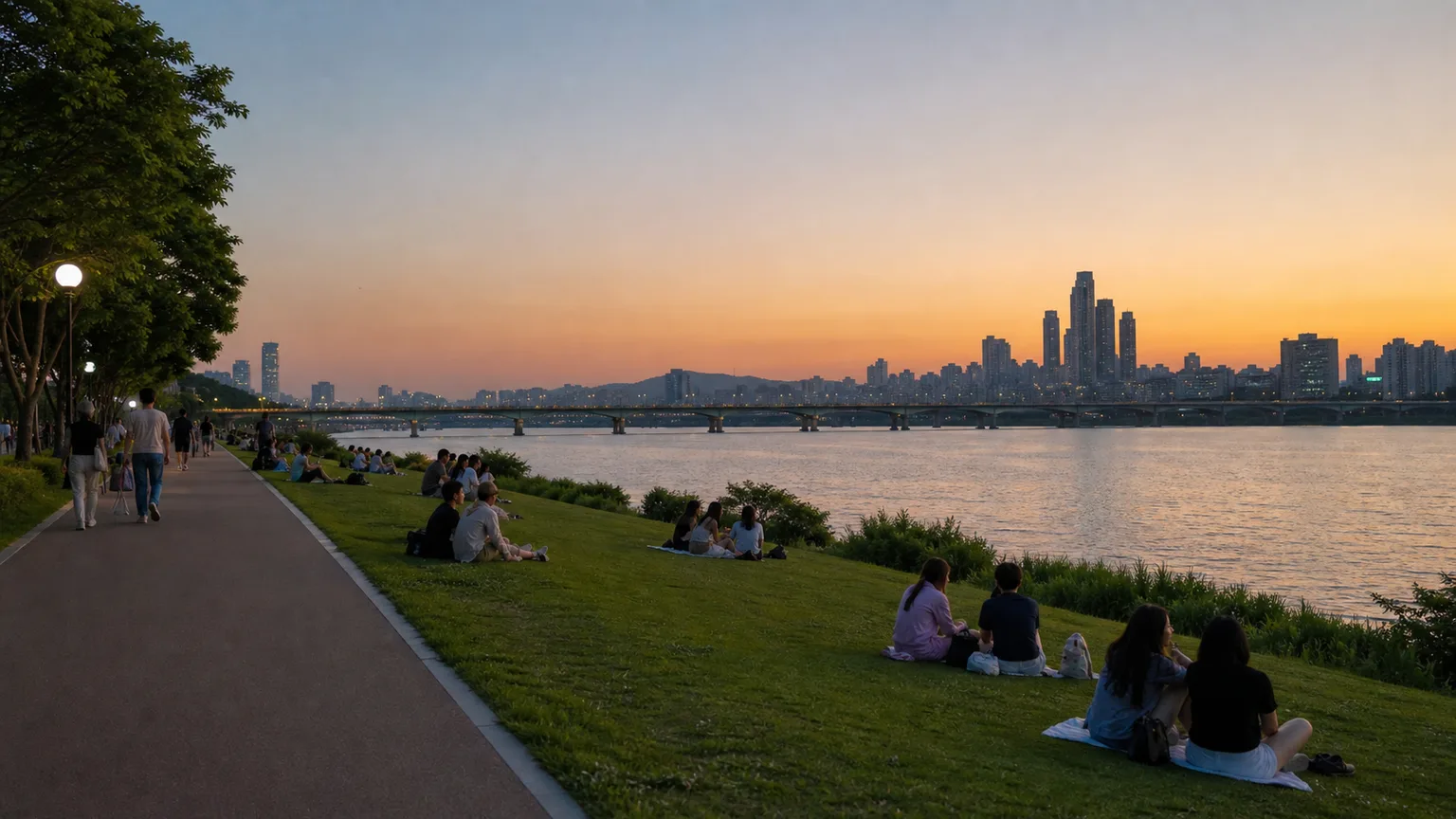
Seoul’s river parks are often described as one long public living room. That is broadly true: you can arrive with a convenience-store picnic, walk a riverside path, or watch the light change under a bridge without buying a festival ticket. Yet the summer edition of the 2026 Hangang Festival, scheduled for August 1–16 across nine Hangang parks, asks visitors to read the river a little more carefully. Its programmes create small, temporary destinations inside a public space that remains open around them.
That distinction matters because a Korean city festival is not always a fenced attraction with one entrance and one timetable. The practical question is less “Can I go to Hangang?” than “Which part of Hangang am I trying to use, and what does that part require?” Seoul’s festival listing points to activities spread across multiple parks, so the river itself works as the connective experience while individual events can have their own participation method, timing, or meeting-point rules.
Plan the river in two layers
This summer is materially broader than the preceding spring edition. The same official introduction lists the spring festival across three parks with seven programmes, while the August edition spans nine parks and 18 programmes. That is not a reason to race across the city; it is a reason to choose one riverside area first and treat any specific programme as a separate decision.
For a first visit, make the park your fixed plan and the programme your optional layer. Choose a riverside area you would still enjoy on its own, then check whether a particular workshop, performance, water activity, or evening event has a separate registration page. This avoids building an entire day around an activity that is full, moved, or not offered at the branch of the festival you expected.
Yeouido is the most intuitive starting point for a visitor because it pairs the river with dense transit connections and the commercial centre around Yeouido Station. Banpo offers a different rhythm: it works well when an evening walk and the bridge views are the point, rather than a packed programme. The festival’s official page is the source to consult first, not a recycled event calendar, because programme names, locations, and booking arrangements can change closer to the date.
There is a useful historical reason this feels different from a conventional ticketed festival. The Hangang has long been a civic landscape as well as a scenic backdrop: bridges, parks, cycling routes, picnic lawns, and waterside facilities are used by people whose plans range from a short lunch break to a whole summer evening. A festival on the river works by adding programmed moments to that shared landscape, not by replacing it. Visitors who leave space for an unplanned walk usually understand the city better than those who treat the river as a single attraction to complete.
What respectful use looks like on a busy festival night
At a crowded riverside event, the smallest decisions are the ones locals notice. Keep a clear lane on paths used by cyclists and runners; do not spread a picnic blanket across a circulation route; and follow staff direction at a queue even if the park itself has no gate. If you are waiting for friends, choose a visible landmark rather than stopping at the mouth of a stairway or a bridge approach. These are not formalities. They help a public park continue to work for people who are commuting, exercising, or simply passing through while an event is on.
For overseas visitors, the best itinerary is deliberately modest: arrive with time to orient yourself, eat or walk before the programme’s start, and keep a second nearby park activity in mind. If the official booking details are Korean-only, use browser translation to understand the rules, but preserve the original page and the confirmation message on your phone. A reservation confirmation is more useful than a screenshot of a third-party listing when an organiser needs to check your entry.
The better question to carry to the river
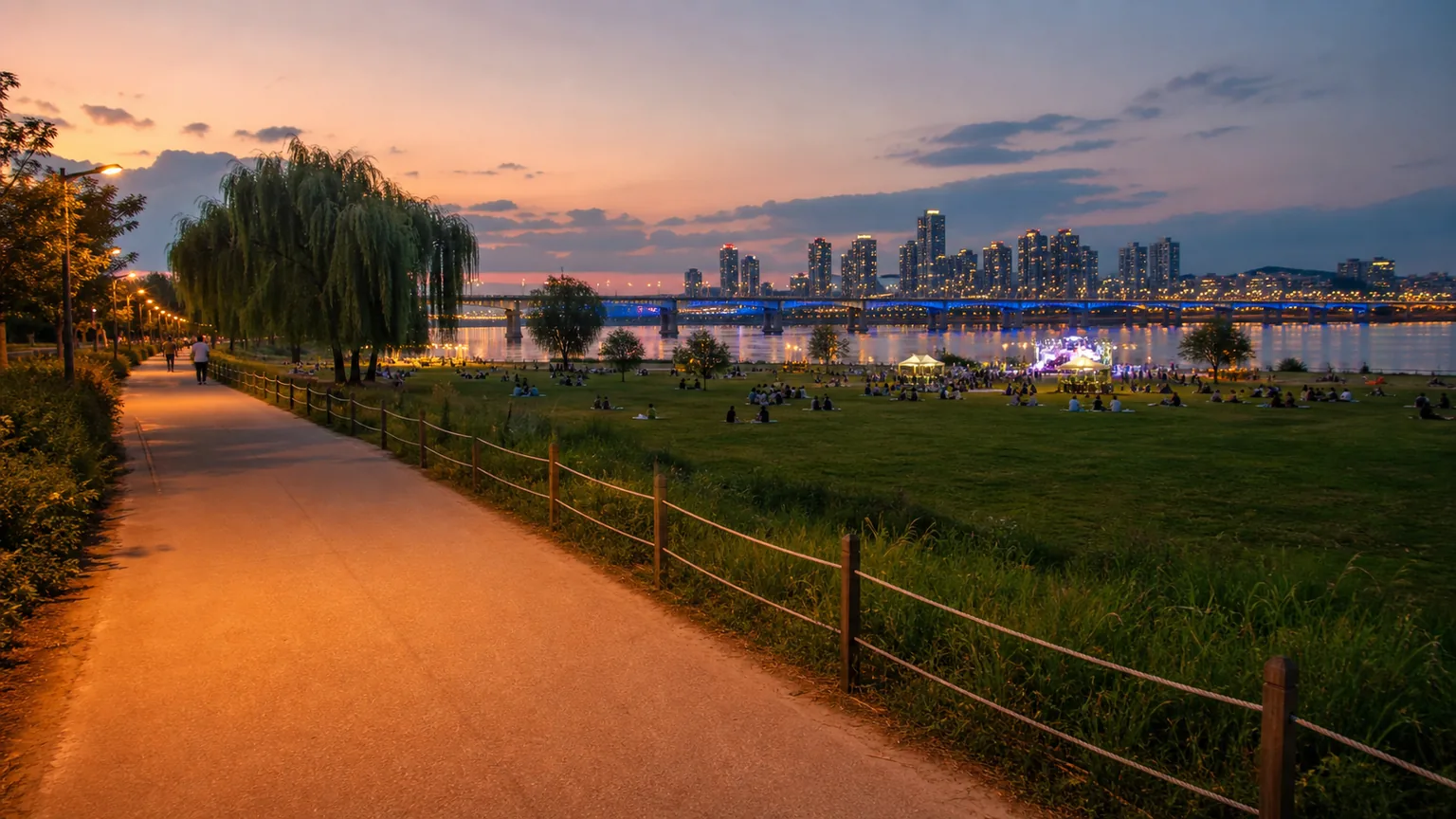
The Hangang Festival is most rewarding when it is not forced to carry the whole trip. Let the official programme give shape to an evening, but let the river remain the larger experience: a public place where Seoul’s scale, pace, and shared habits are visible without a formal tour. Check the current listing, reserve only what genuinely improves your plan, and arrive ready to enjoy the park even if the programme is the part that changes.