Culinary Class Wars Season 2: A Sensation Caught in the Crossfire of Controversy
For the Uninitiated: What exactly is "Culinary Class Wars" Season 2?
The Netflix original variety sensation, Culinary Class Wars, which took the global food scene by storm last year, has returned for a highly anticipated second season. True to its provocative title, the show frames cooking as a "class war." It’s a blind survival competition where "Black Spoon" chefs—underdogs with raw talent and grit but no formal fame—face off against "White Spoon" chefs—industry titans and Michelin-starred legends who have long basked in the media spotlight. In this arena, prestigious credentials and faces are hidden; only the "absolute standard of taste" dictates who survives.
Media Frenzy: How the Korean Press is Reacting
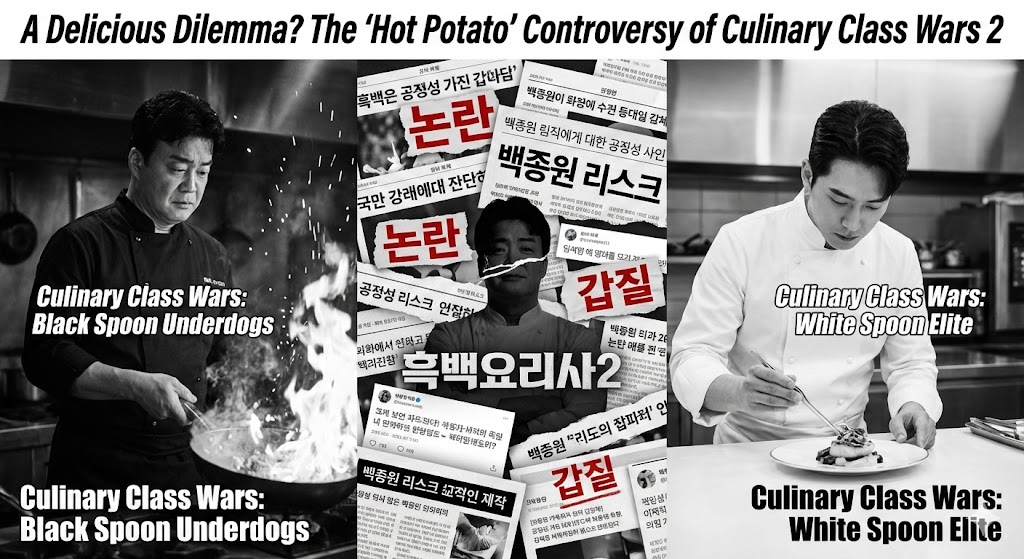
The media's response has been electric, though polarized. Following the release, headlines have been a mix of hype and scrutiny. Major outlets like Chosun Ilbo and Hankook Ilbo have centered their coverage on the "Baek Jong-won Risk," highlighting the baggage the show carries. On the flip side, YTN praised its dominance, noting it hit the #1 spot immediately after release, while Elle pointed out that Season 2 successfully addressed past flaws by introducing the "Hidden White Spoon" rule, significantly upping the stakes.
A Nation Divided: Public Opinion is Split Down the Middle
The online discourse is split exactly 50/50. Those in the "pro" camp are captivated by the sheer quality of the competition, noting that the inclusion of Michelin-starred masters has elevated the show to a "world-class gastronomic feast." They appreciate the cleaner editing and the focus on the culinary craft itself.
However, a loud "con" camp remains. Many viewers find it difficult to stay immersed due to the recent controversies surrounding judge Baek Jong-won. "It’s hard to trust his judgment when his personal credibility is in question," some argue, critiquing the production team for pushing through with his appearance despite ongoing public backlash regarding his business ethics.
The Elephant in the Room: What is the "Baek Jong-won Risk"?
At the heart of the storm lies the "Baek Jong-won Risk." Recent allegations surrounding his company—ranging from tax evasion and "gapjil" (abuse of power) to environmental concerns—have cast a long shadow. For many, the issue is one of "qualification." Can a person mired in such ethical debates fairly judge the life's work of others? Since the show was pre-recorded before these issues peaked, his presence has become a flashpoint for debate regarding the social responsibility and moral standards of media icons.
Reframing the Narrative: Focusing on the Essence
Ironically, because the producers were so aware of the noise, they seem to have doubled down on the essence of the show: the cooking. Season 2 feels more focused than the first. It has stripped away the excessive reactions and melodrama, choosing instead to focus on the philosophy and "soul" that chefs pour into every dish. Watching a master’s precision—the science of fire, the art of the knife, and the storytelling behind the ingredients—is like watching a symphony. If you can tune out the noise, you’ll find a drama that surpasses the first season in its pure, raw passion.
Where Do You Stand?
In this tug-of-war between entertainment value and ethical controversy, how should we consume our content? Beyond the simple "It's fun" or "I'm not watching," this show invites us to think about the balance between art and ethics, and the responsibility of the modern consumer. Culinary Class Wars Season 2 is no longer just a cooking show; it’s a mirror reflecting our society's evolving moral compass. What’s your take?


