One finds that in the global culinary discourse, certain dishes become iconic ambassadors for their entire culture. For Korea, that has often meant the sizzle of Samgyeopsal on a grill or the artfully arranged colors of Bibimbap. But what if the true heart of Korean comfort, the dish that Koreans themselves consistently turn to, lies simmering in a humble stone pot? If you crave authentic Korean flavors beyond the usual suspects, then it is time to explore the world of Kimchi-jjigae. This hearty, bubbling stew is a cornerstone of Korean cuisine, a complex tapestry of spicy, savory, and sour notes that warms you from the inside out. In these musings, we shall discover why Kimchi-jjigae holds such a special place in the Korean soul, tracing its rich history, its surprising global ascent, and all that one needs to appreciate this quintessential comfort food.
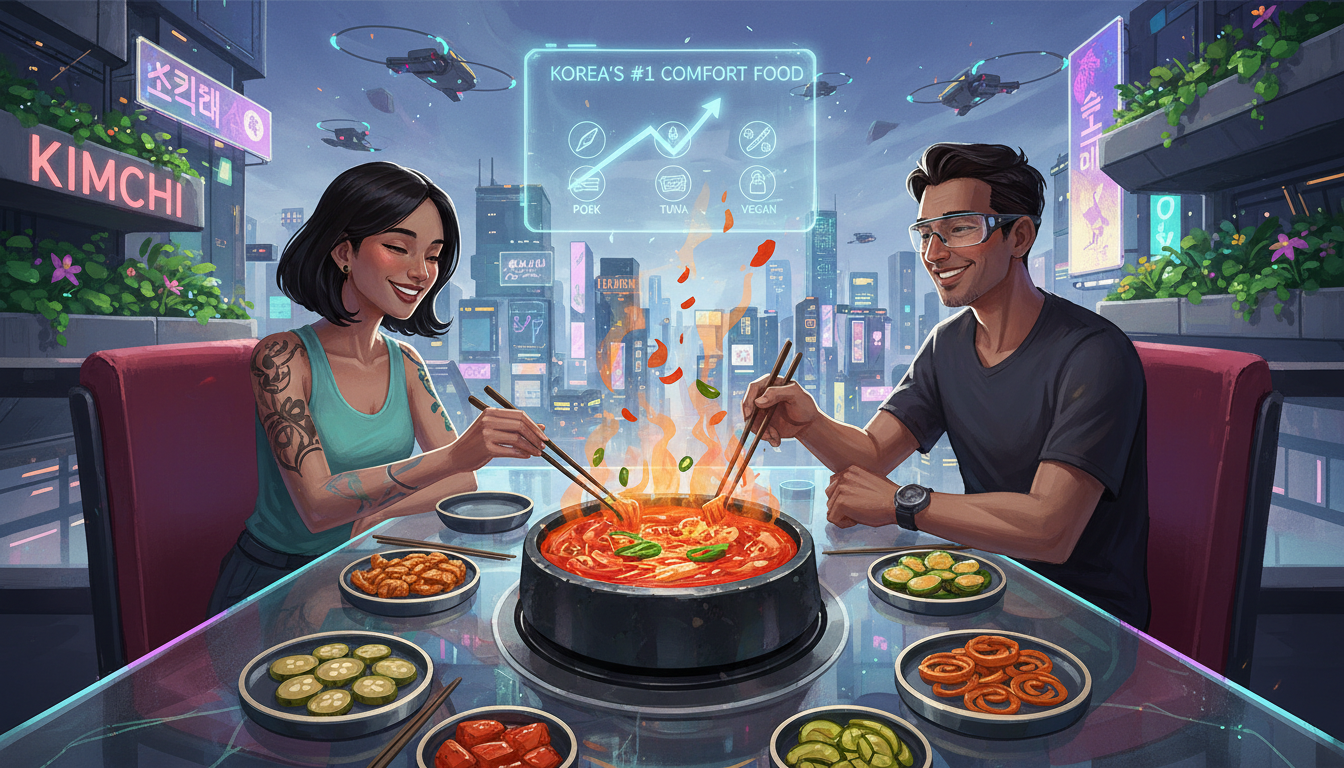
Key Takeaways
- Korea's Reigning Dish: Forget what you think you know. Recent polls confirm Kimchi-jjigae as the undisputed top choice for Koreans when dining out.
- A Cultural & Historical Icon: Its origins are a study in resourcefulness, tracing back centuries and embodying the Korean spirit of community and resilience.
- Versatile & Globally Trending: From classic pork to inventive vegan options, Kimchi-jjigae's adaptability is fueling its rapid international fame for both its bold flavors and perceived health benefits.
The Essentials: What is Kimchi-jjigae and How It's Made
At its core, Kimchi-jjigae(김치찌개), or kimchi stew, is the embodiment of Korean comfort. It is a dish renowned for its bold, spicy, and savory character, a culinary experience typically served while still bubbling with volcanic heat.
The "What": A Hearty, Flavorful Korean Stew
To define Kimchi-jjigae is to describe a study in balance. Its defining flavor profile is a harmonious tension between the spicy kick of chili, the deep umami of its base, and the prominent sourness derived from well-fermented kimchi. This results in an inviting, vibrant red appearance, a visual promise of the intensity to come, colored by Korean chili paste (gochujang) and chili flakes (gochugaru). The foundational trinity of this stew consists of aged kimchi, a choice of protein—most commonly pork—and the soft, yielding presence of tofu.
Key Ingredients for Authenticity
The soul of the stew is undeniably its Aged Kimchi. It is the undisputed star, providing the deep, complex, and sour notes that fresh kimchi simply cannot replicate. To use young kimchi would be to miss the point entirely. The Protein is where personal history and preference come into play. Fatty pork belly is the traditional choice, its rendered fat adding an irreplaceable richness. Yet, the stew gracefully accommodates other stars, from canned tuna (chamchi kimchi-jjigae) and spam to beef or even Pacific saury (kkongchi kimchi-jjigae). Soft Tofu, diced or sliced, acts as a textural counterpoint, a creamy canvas that eagerly absorbs the stew's robust flavors. The flavor base is built upon a foundation of Aromatics & Broth—onions, garlic, and scallions—while water or a more complex anchovy (myeolchi) stock forms the liquid medium. Finally, the Seasonings—gochujang and gochugaru for heat, with doenjang (fermented bean paste) or soy sauce occasionally added for another layer of savory depth—complete the symphony.
How It's Prepared and Served
The creation of Kimchi-jjigae is a process of deliberate flavor-building. Preparation often begins with the crucial step of stir-frying the chosen meat and kimchi together, a technique that coaxes out and deepens their respective characters. From there, the ingredients are simmered in broth, a slow marriage that allows the distinct elements to meld into a cohesive, powerful whole. Tofu and scallions, more delicate, are typically added near the end of the cooking process. True to tradition, the stew is presented boiling hot in an earthen or stone pot (ttukbaegi), which masterfully retains heat throughout the meal. It is never eaten in isolation; it demands the companionship of steamed rice and a constellation of traditional Korean side dishes (banchan).
Why It Matters Today: Kimchi-jjigae's Current Reign
Kimchi-jjigae transcends its status as a mere dish; it is a cultural phenomenon, a culinary touchstone for Koreans seeking a satisfying meal. Its popularity, far from waning, continues to ascend both at home and on the world stage.
Korea's #1 Comfort Food
Recent data confirms what many have long suspected. A 2024 Gallup Korea poll crowned Kimchi-jjigae as the most popular Korean food, notably surpassing its venerable rival, Doenjang-jjigae. Its appeal is universal, cutting across generations, though it holds a particularly strong nostalgic power for those in their 40s and 50s. It is consistently described in terms that evoke deep comfort: warming, restorative, a true "soul food." It's the meal sought on a cold day, the restorative broth after a long night, the very taste of home.
Versatility and Taste That Captivates
Part of its enduring appeal lies in its profound adaptability. Kimchi-jjigae can be customized with an almost endless variety of proteins and vegetables, making it both an economical and deeply personal dish. Its flavor profile is often described as "addictive"—that deep, tangy profile from the perfectly fermented kimchi, enriched by the melting fat of pork, creates a singular gustatory experience. There is also a certain magic in its longevity; many attest that its taste deepens and improves upon reheating, a quality that makes it perfectly suited for modern single-person households and busy lives.
Global Rise of a Korean Staple
Fueled by the irresistible global tide of the Korean Wave—the K-dramas and K-pop that have captured the world's imagination—Kimchi-jjigae is gaining significant international recognition. It is now a fixture in Korean restaurants from Seoul to São Paulo and is beginning to inspire fusion creations in Western culinary scenes. This ascent is further bolstered by a perception of it as a healthy, probiotic-rich food, a quality that resonates deeply with an increasingly health-conscious global consumer base.
The Debates & Controversies: More Than Just a Stew
While the dish itself is a source of unity, its context is not without debate. Kimchi-jjigae sits at the nexus of friendly domestic rivalries and far more intense international disputes over the cultural ownership of its core ingredient.
The Great Korean Stew Rivalry
Within Korea, a long-standing and mostly lighthearted debate has simmered for generations: Kimchi-jjigae versus Doenjang-jjigae. Which stew is the true national favorite? For years, the answer was unclear, but recent trends show Kimchi-jjigae pulling ahead. This shift might be attributed to a growing collective preference for spicier flavors or perhaps its remarkable convenience—a stew that only gets better with time.
Global Kimchi Origin Disputes
On the international stage, the discussions are far more pointed. Significant disputes, particularly between South Korea and China, have arisen concerning the origin and cultural identity of kimchi. This directly impacts the perception of Kimchi-jjigae as a uniquely Korean creation. These controversies manifest in battles over terminology, such as the pushback against Chinese translations like "la bai cai" in favor of Korea's advocated term "xinqi." Further friction arose from Chinese claims of leading the "kimchi industry" based on ISO standards for pao cai (a different, Chinese fermented vegetable dish), sparking fierce reactions in Southorea, which rightly points to kimchi's status as an "iconic food of Korea" and a UNESCO Intangible Cultural Heritage. This isn't the first such dispute; in 1996, South Korea protested Japan's commercial "kimuchi," arguing its production methods differed fundamentally from traditionally fermented kimchi.
Culinary Nuances: Best Practices & Ingredients
Among chefs and food enthusiasts, the debates are more granular, revolving around the "best" or most "authentic" way to prepare the stew. These discussions delve into the finer points of technique: should one add a touch of salted anchovy puree for a deeper umami? What is the ideal level of complexity? These are not arguments of right or wrong, but rather passionate explorations of a beloved and evolving culinary craft.
The Future of Kimchi-jjigae
Kimchi-jjigae is not a static relic. It is a dynamic dish, poised for continued evolution, propelled by global food trends, a focus on health, and a spirit of culinary innovation.
Expanding Global Palates & Cultural Integration
One can anticipate its continued journey from ethnic specialty to mainstream staple. Its ubiquity in international markets will likely increase, moving beyond the confines of Korean restaurants and into the kitchens of home cooks worldwide. The sustained power of the Korean Wave (Hallyu) and rising global exports of high-quality kimchi will only accelerate this integration.
Innovative Ingredients & Recipes
As it travels, it will adapt. We can expect to see further diversification of proteins beyond pork, with more variations featuring seafood, chicken, and an expanding array of plant-based options like smoked tofu and various mushrooms. Chefs are already experimenting with new techniques, such as marinating pork in kimchi juice for deeper flavor or adding a sliver of butter at the end for unexpected richness. This will inevitably lead to more fusion creations, with the essence of Kimchi-jjigae finding its way into Western-style casseroles, pasta dishes, or even tacos.
Health & Convenience Focus
The health narrative will become more prominent. The focus on kimchi's probiotic content and its benefits for gut health will likely lead to a demand for organic, low-sodium, and artisanal versions. Simultaneously, the demand for convenience will drive an expansion of high-quality, pre-packaged Kimchi-jjigae and meal kits designed for our increasingly busy lifestyles.
Sustainable Practices & Culinary Craftsmanship
In a way, the future brings the dish full circle. Its origins in zero-waste cooking align perfectly with modern sustainable food trends, encouraging the full utilization of all ingredients. At the same time, we can expect technological advancements to play a role, with research dedicated to optimizing fermentation processes and developing new kimchi varieties that offer consistency and enhanced nutritional benefits.
Frequently Asked Questions About Kimchi-jjigae
Q1: What makes Kimchi-jjigae different from other Korean stews like Doenjang-jjigae?
A1: The defining difference lies in the base ingredient. Kimchi-jjigae's character is forged by well-fermented, aged kimchi, which imparts its signature spicy, sour, and deeply savory flavor. Doenjang-jjigae, conversely, is built upon Korean soybean paste (doenjang), giving it a more earthy, nutty, and generally less spicy profile.
Q2: Is Kimchi-jjigae always very spicy, or are there milder versions?
A2: While its reputation for spiciness is well-earned, the heat level is highly customizable. The amount of gochugaru (chili flakes) and gochujang (chili paste) can be adjusted in most recipes, and many restaurants are happy to cater to different spice tolerances upon request.
Q3: Can I make Kimchi-jjigae vegetarian or vegan?
A3: Absolutely. It is remarkably adaptable. While pork is traditional, one can create a deeply flavorful vegetarian or vegan version by substituting meat with ingredients like shiitake or oyster mushrooms, smoked tofu, or zucchini. The key is to ensure your kimchi is also vegan, as some traditional recipes include fish sauce or salted shrimp.
Q4: Why is aged or "sour" kimchi preferred for Kimchi-jjigae?
A4: The aging process is crucial. As kimchi ferments over time, it develops a much deeper, more complex, and tangy flavor profile that is absolutely essential for a robust and authentic stew. This prolonged fermentation also cultivates more beneficial probiotics, enhancing both the taste and the health benefits of the final dish.
Top 5 Kimchi-jjigae Restaurants in Seoul
Eunjoojung (은주정)
Address: 32, Changgyeonggung-ro 8-gil, Jung-gu, Seoul
Feature: Rich pork Kimchi jjigae with generous portions, very popular with long wait times during peak hours.
Gwanghwamunjip (광화문집)
Address: 12, Saemunan-ro 5-gil, Jongno-gu, Seoul
Feature: Old-school Kimchi jjigae restaurant near Gwanghwamun, loved for its nostalgic flavor and simple menu.
Donamdong Jjigae (돈암동찌개)
Address: 34, Dongsomun-ro 20na-gil, Seongbuk-gu, Seoul
Feature: Spicy, hearty Kimchi jjigae served 24 hours, a classic spot for late-night drinks and meals.
Hanokjip (한옥집)
Address: 14, Tongil-ro 9an-gil, Seodaemun-gu, Seoul
Feature: Home-style Kimchi jjigae and other kimchi dishes in a traditional hanok setting, known for deep-flavored aged kimchi.
Jangho Wang Gopchang (장호왕곱창)
Address: 24, Saemunan-ro, Jung-gu, Seoul
Feature: Intense, savory Kimchi jjigae with plenty of pork, famous among nearby office workers.


