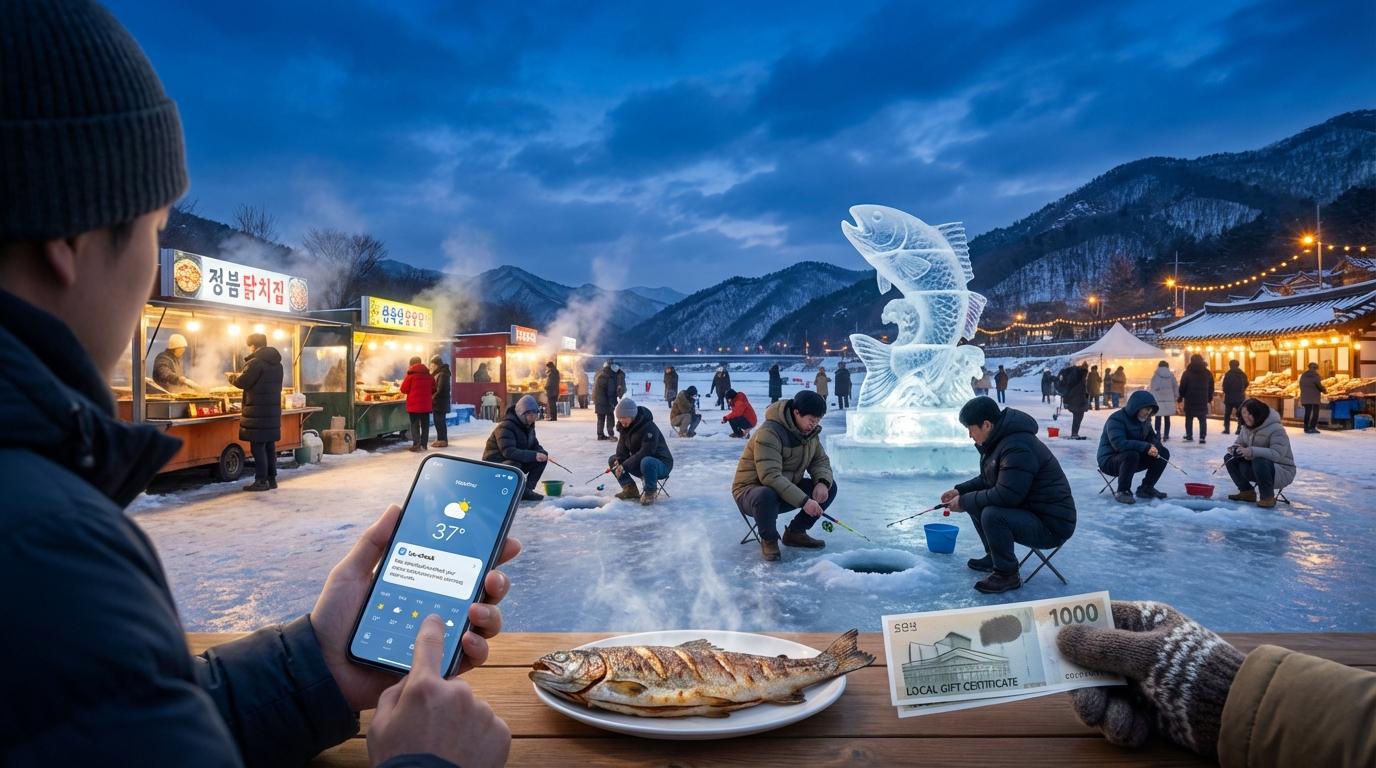
Winter in Korea is a test of endurance, but it’s also a specific sensory experience: the crunch of frozen river water under a boot, the smell of pine needles, and the steam rising from a freshly grilled trout. As we move into the 2026 season, however, the "classic" winter festival is undergoing a quiet transformation. It isn't just about survival anymore; it’s about adaptation.
The reality of 2026 is that the weather is no longer a reliable partner. In years past, you could bet on a thick sheet of ice by early January. Now, organizers are pivoting. The real surprise this year isn’t the ice itself, but how festivals are surviving without it.
We’re seeing a "hybrid" model take over. If the ice isn't thick enough for thousands of people to stand on, the festival doesn't just cancel. They’ve integrated massive media art installations, indoor VR experiences, and high-tech snow-making equipment. There’s a palpable sense of urgency now—a collective appreciation for the frost while it lasts.
The 2026 Winter Festival Quick-Glance
- The Heavy Hitters: Hwacheon Sancheoneo (Ice Fishing), Taebaek (Snow Sculptures), and the Seoul Lantern Festival.
- Key Dates: The peak season runs from January 10 to February 22, 2026.
- The "Check Before You Trek" Rule: Climate change has made "ice-check" apps mandatory. Always verify ice thickness on official sites 48 hours before you head out.
The Non-Negotiables: Ice, Trout, and Tradition
If you’re planning day trips from Seoul, these three destinations define the season:
Hwacheon Sancheoneo Ice Festival (Jan 10 – Feb 1, 2026)
Still the heavyweight champion. While the bare-handed fishing grabs the headlines, the real draw in 2026 is the indoor ice sculpture hall. It’s an massive collaboration with artists from Harbin, and it’s currently the largest of its kind in the world. It’s cold, dark, and slightly surreal.
Pyeongchang Trout Festival (Jan 9 – Feb 9, 2026)
Located in the "Alps of Korea," Pyeongchang leans into the adrenaline. Beyond fishing, look for "ice bumper cars." They’ve become a viral staple on Korean social media for a reason: there’s something inherently funny about sliding uncontrollably across a frozen river in a neon-lit orb.
Taebaek Mountain Snow Festival (Jan 31 – Feb 8, 2026)
Go here for the scale. The snow sculptures at Dangun Seongje are massive, but the 2026 program has pivoted toward "Mountain Trekking." It’s worth the hike to see the rime frost—frozen water vapor that coats the trees in white needles. It looks like a scene from another planet.
The "Local Love" Economy
When you buy your entry ticket—usually between 15,000 and 20,000 KRW—don't throw away the paper vouchers they hand you. These are Local Love Gift Certificates.
Think of them as cash. This isn’t a marketing gimmick; it’s a lifeline for rural economies in Gyeonggi and Gangwon provinces. Using these to buy a bowl of eomuk-tang (fish cake soup) or a bag of gun-bam (roasted chestnuts) at a local tent is how you actually participate in the festival. It keeps the lights on in these small towns long after the snow melts.
The Ethics & Hygiene Check
It’s worth wondering whether the traditional fishing model can survive the decade. Festivals like Hwacheon are facing increased scrutiny regarding fish welfare. In response, the 2026 programs have diversified, leaning harder into light displays and winter sports to balance the fishing-heavy focus.
Hygiene has also seen a massive upgrade. Following the "makgeolli-in-the-soup" scandal in Taebaek, 2026 festivals have implemented strict, transparent kitchen policies. Look for "Open Kitchen" stickers or QR codes near food stalls that link directly to hygiene certifications. It’s a necessary step toward professionalizing what used to be a very "wild west" food scene.
2026 Survival Guide
- Transport: Do not drive. The "Festival Express" buses from Dong Seoul Terminal or the ITX-Cheongchun train are your only sane options. Traffic jams near Hwacheon can turn a two-hour drive into a five-hour nightmare.
- The Heat Pack Strategy: Don't just hold them. Stick one on your lower back and one inside each boot.
- Ground Insulation: If you’re ice fishing, you’ll be stationary for hours. The cold doesn't come from the air; it rises from the ice. Bring a small, foldable foam mat to sit or stand on. It’s the difference between a fun afternoon and a numb lower body.
The Analyst’s Take: What’s Next?
Expect 2027 to move even further away from "natural" ice. As winters become more unpredictable, we predict a surge in "Urban Winter Zones"—massive, refrigerated indoor ice parks in the heart of Seoul that mimic the festival feel without the environmental risk. The future of the Korean winter is increasingly "weather-proof."
What’s your pick for 2026? Are you heading to the mountains for the frost, or staying in the city for the lights? Let us know in the comments.
Bespoke FAQ
Q: Are these festivals pet-friendly?
A: Almost never. The crowds, the sharp hooks, and the slippery ice make it a hazard for pets. Most main zones have strict no-pet policies.
Q: Can I actually eat the fish I catch?
A: Yes. Every fishing festival has a "Grill Station." For a few thousand won, they’ll clean and salt-grill your trout on the spot. It is, arguably, the best meal you’ll have all winter.
Q: Do I need to book in advance?
A: If you’re going on a weekend, yes. Online slots for Hwacheon and Pyeongchang sell out weeks in advance. Weekdays are much more relaxed for on-site ticket purchases.


