I’m SOLO Explained: How Korea’s Biggest Dating Show Actually Works
Netflix’s English catalogue makes I’m SOLO easy to encounter, but the Korean title, 나는 SOLO, carries a slightly different invitation: watch a group of people negotiate first impressions in public. The official Netflix page lists the series for 2026, while the current Korean SBS programme surfaces continue to present new clips from the SBS Plus × ENA show. That combination is a useful reason to look beyond the subtitles before deciding what the programme is saying.
This is not a field guide to how all Koreans date. It is an edited reality format, with producers, cameras and a deliberately limited setting. Its real value for an overseas viewer is narrower and more interesting: it makes certain Korean conversational habits, status questions and group dynamics visible enough to discuss—provided that the viewer keeps the boundary between television and ordinary life in view.
Start with the names, not the romance
A first-time viewer will quickly notice that the participants are addressed by recurring given names rather than the names they use outside the programme. Current SBS clip titles pair names such as Young-sik and Young-sook with each new interaction. That device does more than make a crowded cast easier to follow. It gives the edit a shared vocabulary: the audience can remember a choice, a reversal or an awkward conversation without treating a participant’s off-screen identity as the subject.
For English-language viewers, the practical move is simple. Learn the names as programme roles, not as clues to search for. A subtitle may flatten the repetition, yet the names are part of the format’s rhythm. They let the show build character through what people say in the group, in a date, and after a selection—not through a claim that a single episode has uncovered someone’s complete personality.
Notice how the format makes choices audible
I’m SOLO is built around situations in which interest has to be stated, inferred or revisited while others are nearby. That is why a direct question can matter more than a dramatic declaration. A viewer does not need to decide who is right in every exchange to see the recurring tension: people are trying to be clear without losing face, and they are doing so in a setting where private feelings become group information.
A useful reading rule: separate the programme’s visible fact—who spoke, chose, declined or changed a plan—from the interpretation added by hosts, captions and viewers. Reality television is designed to make both layers feel immediate.

What this can—and cannot—teach about Korea
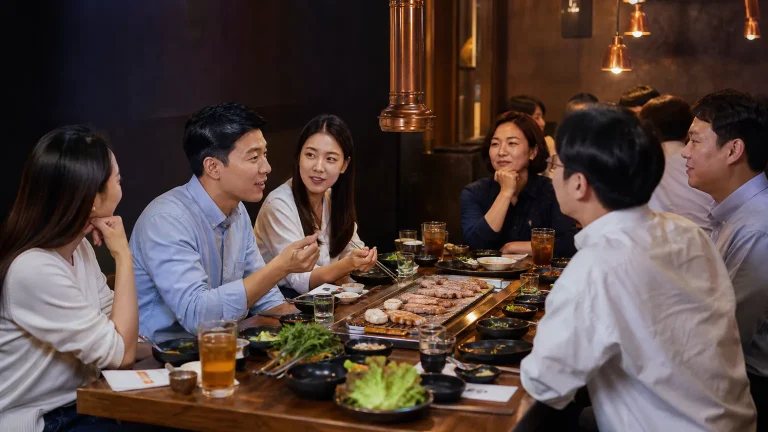
The programme can be a useful prompt to ask better questions about contemporary Korean media: why does a group meal change the tone of a conversation? Why do age, job, location or future plans become meaningful topics? Why is a pause sometimes edited as intensely as an answer? But it cannot answer those questions for every Korean household, workplace or relationship. The careful conclusion is that the format packages recognisable social questions into a game, not that it supplies a national rulebook.
That distinction matters particularly for visitors who know Korea mainly through drama and variety shows. Watch the SBS material or the official Netflix listing as a starting point, then let actual conversations with friends, hosts or colleagues stay individual. Curiosity travels better than comparison: “Is this kind of question common for you?” is more respectful than “The show says Koreans always ask this.”
The etiquette extends to the audience
Korean reality shows invite energetic discussion, but an overseas viewer can participate without crossing into surveillance. Use the official broadcaster and streaming pages, avoid searching for private social accounts, and do not turn an edited moment into a diagnosis. If a scene feels confusing, describe the on-screen action first and leave room for a different reading. That is a better way to enjoy the programme—and a better habit for approaching any culture through television.
I’m SOLO becomes more rewarding once its question is changed. Instead of asking whether it reveals the one Korean way to date, ask what this particular show makes discussable: names, choices, hesitation, publicness and the pressure of being watched. The answer will be more modest than a dating-app lesson, but far more useful.