Innisfree’s Tube Cleansing Balm Explained
Innisfree’s Green Tea Ceramide Cleansing Balm puts an oil-based cleanser in a tube, which makes the format easier to portion and carry than the jar most shoppers associate with a Korean cleansing balm. The change is practical rather than revolutionary, but it says something useful about how K-beauty routines are being translated for everyday use.
The product became a current Korean beauty story with Innisfree’s August 25 launch announcement, which described it as a Green Tea Ceramide Cleansing Balm and set a September 1 domestic retail date after an earlier Naver brand-store release. The original Korean launch announcement is a brand source, so its product claims should be read as the company’s description rather than independent performance evidence. What overseas readers can verify more directly is that the same named product is listed by Innisfree in the United States and Australia.
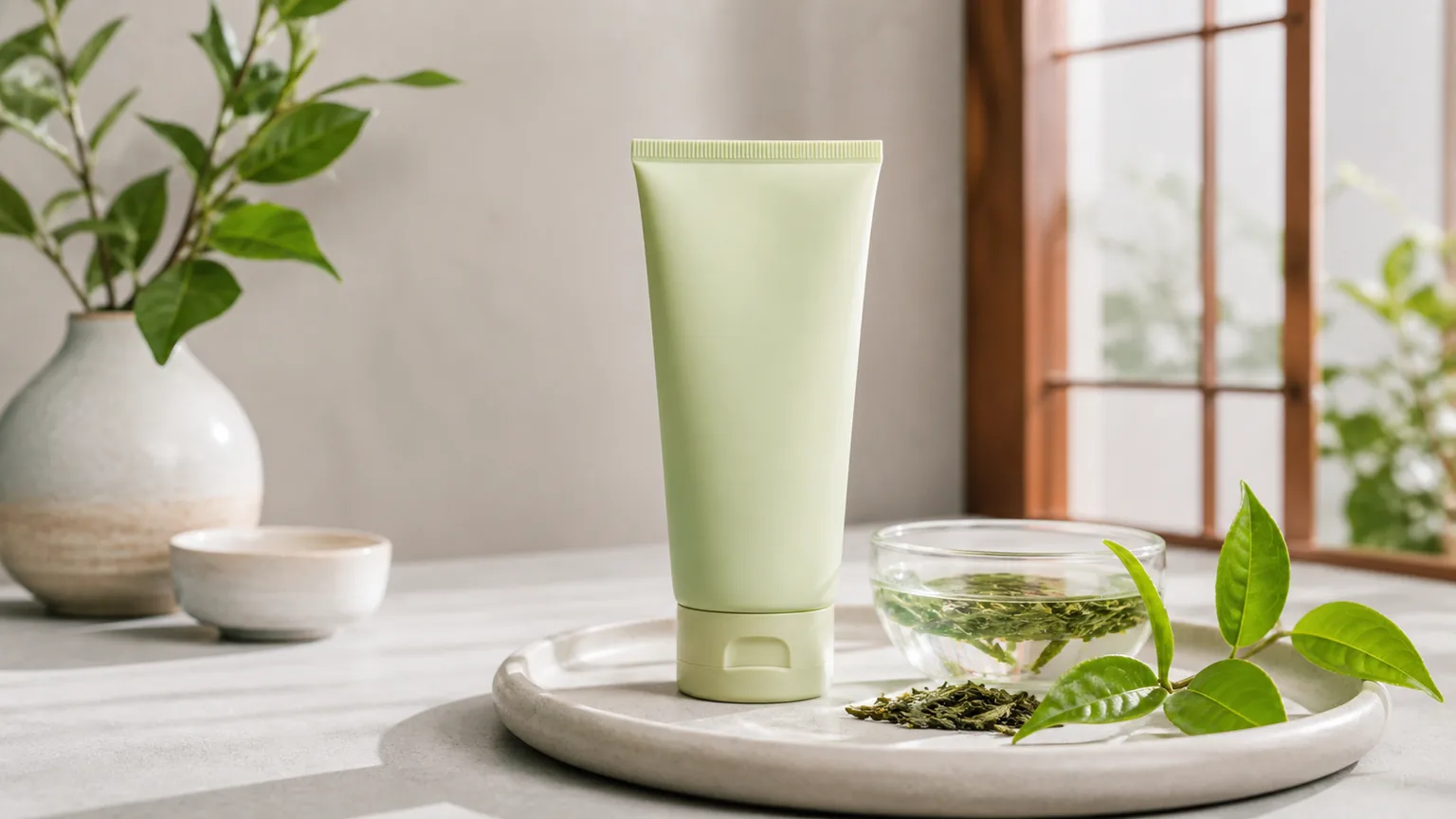
Concept visualization of the tube packaging structure
What is different about a tube cleansing balm?
A traditional cleansing balm is often a solid or semi-solid oil cleanser scooped from a jar. The ritual is familiar: apply it to dry skin, massage it over sunscreen or makeup, add water so it emulsifies, then rinse. A tube changes the mechanics. It offers a measured squeeze, avoids dipping fingers into a pot, and can be less awkward in a gym bag or travel pouch. None of that automatically makes one formula better, but it can make an oil-first cleanse easier to repeat consistently.
Innisfree’s U.S. product page calls this a “sanitary, mess-free tube” and says to apply it to dry skin, massage, add water to emulsify, and rinse. It describes the product as removing waterproof makeup, sunscreen, and daily impurities in one step, while presenting its green tea complex and ceramide as moisture-barrier support. Those are the brand’s claims. If you have reactive skin, wear contact lenses, or use prescribed skin treatment, a marketing page is not a substitute for your clinician’s advice; patch test a new product and follow the package directions.
The most concrete format detail is the size. Both the U.S. listing and the Australian listing identify the balm as 100g. The U.S. page currently displays $19 but also shows a restock notification, while the Australian page lists $27. Availability, price, and ingredient lists can differ by market, so shoppers should use the local official store rather than assume a Korean launch page covers their country.
Does it replace the Korean double cleanse?
Sometimes, but not by definition. “Double cleansing” is a routine shorthand, not a rule that every face needs on every morning and night. In its most familiar form, an oil cleanser is used first to loosen sunscreen, makeup, and oil-based residue, followed by a water-based cleanser. Innisfree’s U.S. page markets the balm as capable of a one-step Korean double cleanse, but it also says it can be used with other Innisfree cleansers. That is a useful distinction: the brand is presenting options, not a universal mandate.
A reader who wears heavy or water-resistant makeup may still prefer a second cleanser after an oil balm. Someone cleansing lightly in the morning may not need an oil-first step at all. The productive question is whether your face feels comfortably clean after rinsing, without treating dryness, tightness, or irritation as proof that a routine is “working.” The product page says the balm is for all, dehydrated, and dry skin types, but individual tolerance varies. A patch test is sensible, especially because the listed ingredients include fragrance components.
This is where the tube format connects to the broader Korean skincare idea. K-beauty is often marketed abroad as an elaborate sequence, but many Korean routines are more adaptable than that reputation suggests. The enduring logic is to choose a texture and number of steps that suit sunscreen, makeup, season, and skin comfort. Packaging that removes a scoop can make an oil cleanser feel less like a special occasion and more like a usable option.
Concept visualization of the tube packaging structure
How should you use it without overcomplicating the routine?
Start with dry hands and a dry face, following the method on Innisfree’s official page. Use a small amount, massage gently over the areas where you used sunscreen or makeup, add water to emulsify, and rinse with lukewarm water. Avoid scrubbing; the point of an oil cleanser is slip, not friction. If residue remains or you prefer the feel of a second wash, follow with a mild water-based cleanser. If your skin feels uncomfortable, stop rather than adding more steps.
For visitors shopping in Korea, it is useful to recognize the Korean term keulleojing balm (클렌징 밤), meaning cleansing balm. “I-cha se-an” (2차 세안) means a second cleanse. Those terms are helpful for reading shelf labels, but they should not pressure you into a rigid routine. A store recommendation can be a starting point; your own use should still follow product instructions and your skin’s limits.
What this launch really signals
Innisfree’s release is less interesting as a claim that a tube has reinvented cleansing than as a small design decision aimed at reducing friction. The brand’s overseas pages make the international context visible: Korean skincare language travels well, but the successful version is usually the one that explains a texture, a sequence, and a reason to use it without requiring a dozen products. For readers considering this balm, the honest next step is simple: check the official local listing, compare the current ingredient list and price, and decide whether a tube oil cleanser fits your routine.