Daegu Chimaek Is About More Than Korean Fried Chicken
The chicken-and-beer pairing is easy to recognise. The more useful travel question is how to share it with Korean table manners, summer timing and a clear head.
“National Wing Day” was an active U.S. Google Trends query during this selection run. That is not a Korean fact, but it is a genuine sign that fried chicken is on overseas readers’ minds. In Korea, the closest cultural conversation is chimaek: chicken plus maekju, beer. The word is short; the social script around it is not.
Daegu gives that script a useful, real-world setting. The city’s official Korea Tourism Organization festival listing describes the Daegu Chimaek Festival as a summer cultural-tourism event that began in 2013, and its recent profile notes its 2026 Local 100 selection. The Daegu Culture and Arts Promotion Agency reported that the latest edition drew strong overseas visitor interest. Those are verifiable event facts; the recommendation below is a calmer way to understand what the festival is actually celebrating.
Chimaek means a shared table, not a chicken tasting flight
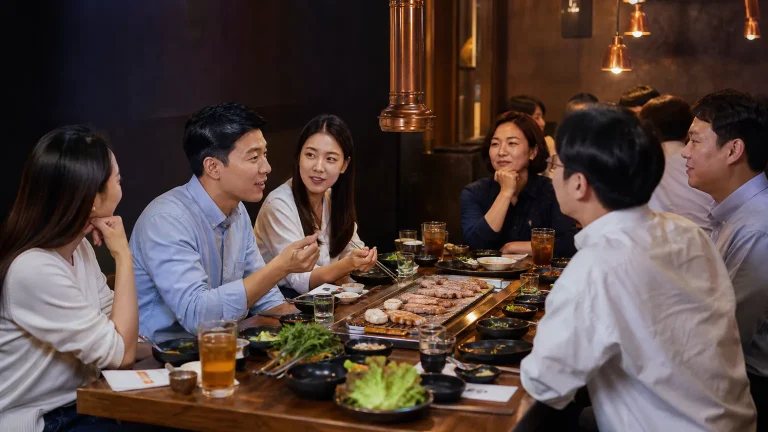
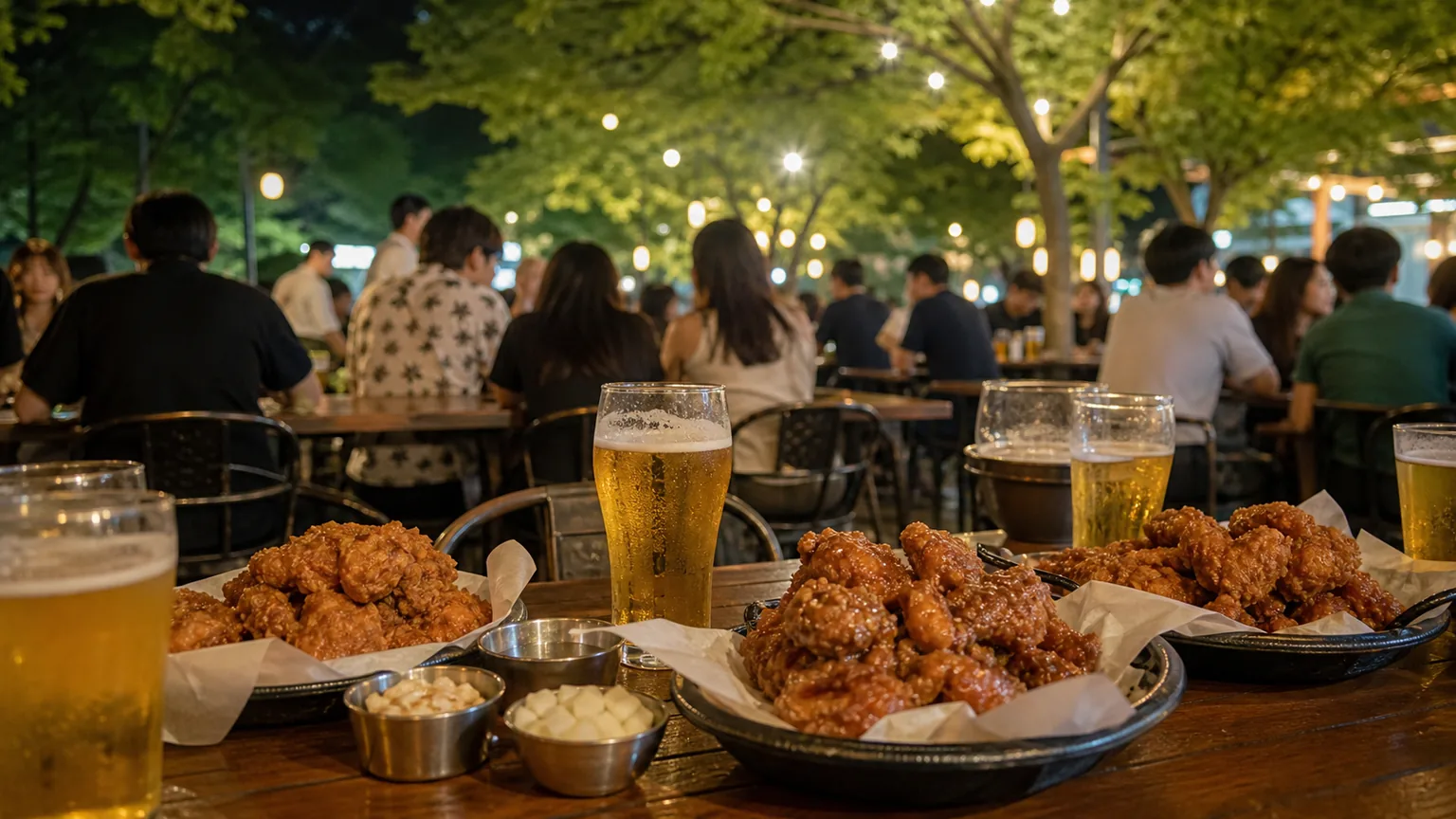
Korean fried chicken can be dazzlingly specific—crisp plain huraideu, sweet-spicy yangnyeom, soy-garlic, boneless pieces, whole cut chicken, and more. But ordering chimaek is usually a group decision. A table chooses a mix, a few sides appear, and people reach in over time. The meal is structured around conversation as much as around comparison.
That makes it different from treating every flavour as an individual challenge. The first useful move for a visitor is to ask what the group wants and order enough to share. Pickled radish, called chikin-mu, is not decorative garnish: it is the cool, sharp counterpoint that resets the palate between bites. If you do not drink alcohol, a soft drink or water is an entirely normal contribution to the table.
Daegu’s claim to chimaek fame is not just a marketing slogan. A recent Korean cultural account in Maeil Shinmun traces a local fried-chicken culture through markets including Chilseong, Pyeonghwa, Beongae and Seomun, noting the development of crisp chicken, salt-dipping and garlic-soy variations. That reporting is a better reason to explore the city than the idea that one perfect “original” chicken shop can settle the matter.
This is where the visitor’s role changes from consumer to guest. A chicken menu can look familiar enough to encourage fast conclusions—plain equals basic, sauce equals adventurous, beer equals compulsory. Korean diners are often making a more ordinary calculation: what will suit everyone at this table? That is why menu questions, shared pieces and side dishes matter. The meal is designed to be adjusted in company rather than perfected alone.
Chimaek works because it is deliberately unprecious: hot food, cold drinks, a shared pace, and enough time for people to stay at the table.
Use Duryu Park as the anchor, then eat like a regular
The festival’s physical centre is Duryu Park, where official festival information places the main programme zones. In festival season, treat the official Daegu Chimaek Festival site as the only trustworthy source for dates, entry rules, zones and food packages; those details vary by year. The organisation’s current history page identifies Duryu Park as the setting and lists participating businesses, but a past timetable is not a booking promise.
Outside the event window, the more durable visitor experience is ordinary Daegu chicken culture: choose a busy, clean local restaurant near the part of town where you are already staying, order one or two styles for the table, and let the food arrive in its own time. This is not a command to chase a viral queue. It is an editorial judgement: a meal you can actually share is more valuable than a photo of a box you barely tasted.
It also makes the visit less fragile. Festivals are wonderful because they concentrate atmosphere, but weather, queues and temporary arrangements can turn them into a poor place to learn how people eat every week. A normal restaurant gives you time to read the menu, notice how the table is set, and pay attention to what your companions are doing. The festival can be the spark; the neighbourhood meal is often the clearer lesson.
Practical planning, without invented logistics
For a festival visit, verify the current official programme before booking a train or hotel; use the operator’s access guidance rather than a recycled social post. For a normal restaurant meal, check its live map listing and opening information on the day. Summer heat can be intense, so build in shade, water and a slow return journey. Do not make alcohol the reason to ignore weather, hydration or your route home.
How to order without overthinking it
How to be friendly without being pressured to drink
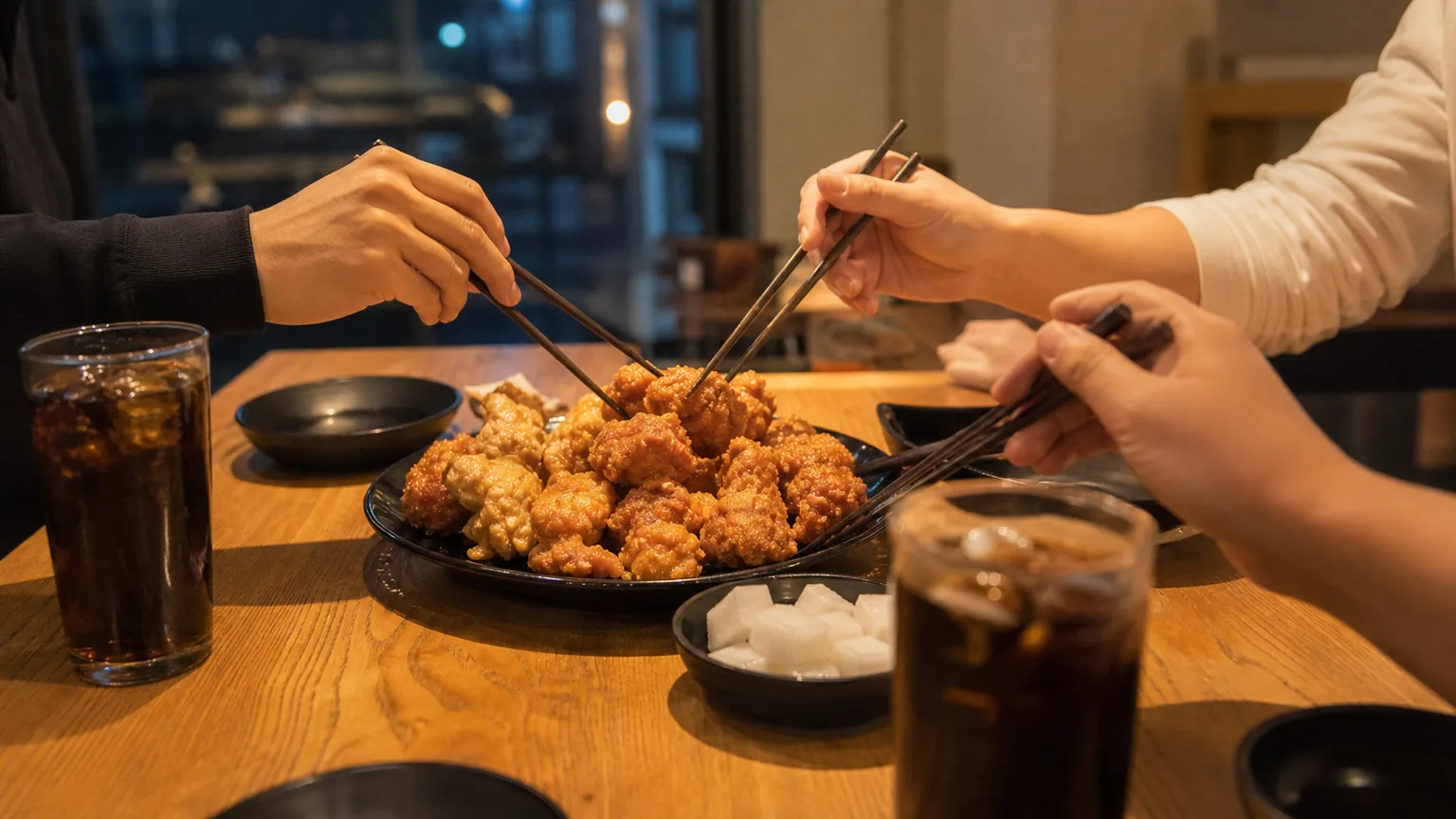
Chimaek often includes beer, but “often” is not “must.” Korean drinking customs are context-sensitive: an older or more formal table may involve offering and receiving a pour with two hands, while a casual group may barely notice. The respectful solution is not to mimic a ritual you do not understand. Watch the group, accept or decline plainly, and keep the tone warm.
If you do not drink, say so once and choose another drink. You do not need an elaborate excuse, and no host should make a guest justify a boundary. If someone offers a drink, a simple thank-you, a small nod and a clear “I’ll have soda/water tonight” keeps the focus on the meal. For visitors, that is better etiquette than forcing a performance of Korean-ness.
Likewise, do not pour alcohol for a stranger just because you have read that it is customary. In a mixed-age table, wait for a cue. In a peer group, ordinary consent and moderation matter more than ceremony. The cultural skill is attentiveness, not memorising a trick.
There is another small issue that rarely appears in travel guides: sharing does not mean taking the last piece without a glance around. When a platter is nearly finished, pause, offer it, or ask. It is not a rigid rule unique to Korea; it is simply good group dining, and it reads especially well at a meal built around a common tray. This is the kind of etiquette visitors can use immediately without turning dinner into a lesson.
Why Daegu’s version matters now
The current international food signal and Daegu’s latest festival coverage meet at a useful point: Korean fried chicken is no longer novel to most foreign visitors, but its context is still easy to miss. The dish is part of an urban evening culture that values shareability, choice and an unhurried table. Daegu’s festival magnifies that culture; its markets and restaurants give it a daily scale.
So take the global wing-day impulse as a reason to look beyond wings. In Daegu, chimaek is less about finding the loudest flavour and more about learning what a Korean shared meal makes room for: a mix of tastes, a pause between bites, and a respectful way to say yes—or no—to the drink.
The lesson travels well beyond Daegu. When a Korean food trend seems instantly familiar, look for the social arrangement around it: who chooses, how dishes are shared, and how a table makes room for different appetites. That attention will serve you better than any claim that one menu order can make a visitor local.