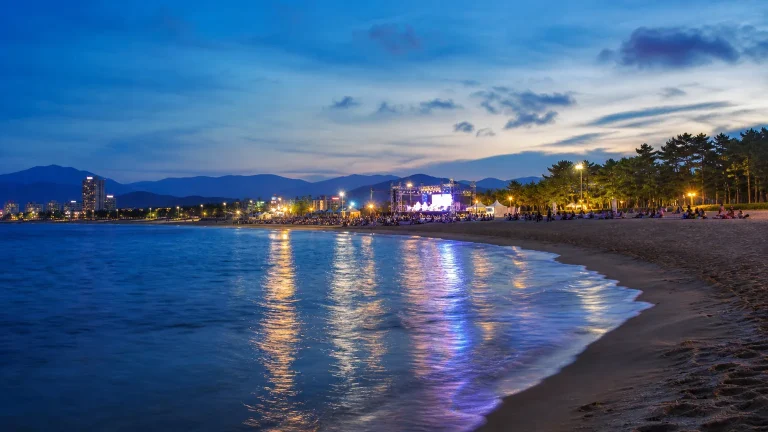
A Summer Night at the Han River: Seoul’s Festival Rhythm
The festival is a timely reason to go. The better reason is to learn how Seoul makes a huge river feel like a neighborhood common room.
Seoul’s Han River is easy to misunderstand from a fast city-break itinerary. You can see it through a car window, cross it on the subway, or photograph a bridge without ever understanding why people linger there. The 2026 Hangang River Festival-Summer offers a more useful entry point: not a single must-see spectacle, but a chance to join the seasonal rhythm of the parks that sit along the water.
The current hook is confirmed. The Seoul Culture Portal lists the 2026 Hangang River Festival-Summer from August 1 through August 16. It is wise to treat those dates as the reliable starting point, then check the festival’s current program before setting out: riverside activities, exact locations and weather decisions can change. The city’s summer festival map is useful context because it places the river program within a larger season of outdoor culture rather than selling it as an isolated attraction.
Plan around certainty, not an imagined schedule
Put August 1–16 in your trip notes, choose one Han River park accessible from your accommodation, and recheck the official festival information on the day. Do not buy a tour or build an evening around an unverified social-media timetable. A rain delay or crowded area does not mean the river has failed you; it usually means it is time for a shorter walk, a nearby meal or a different park.
Why the river feels so social in Seoul
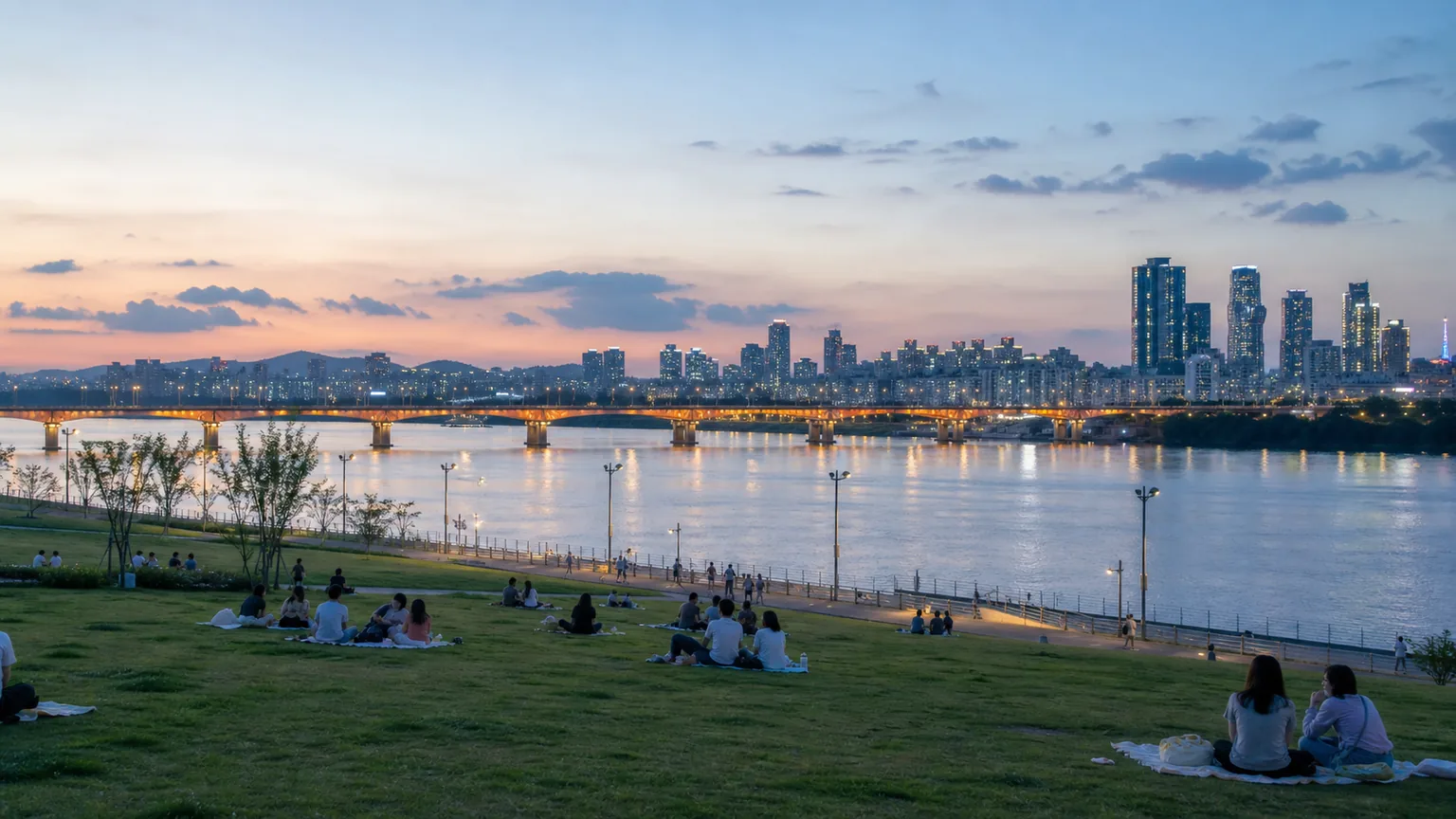
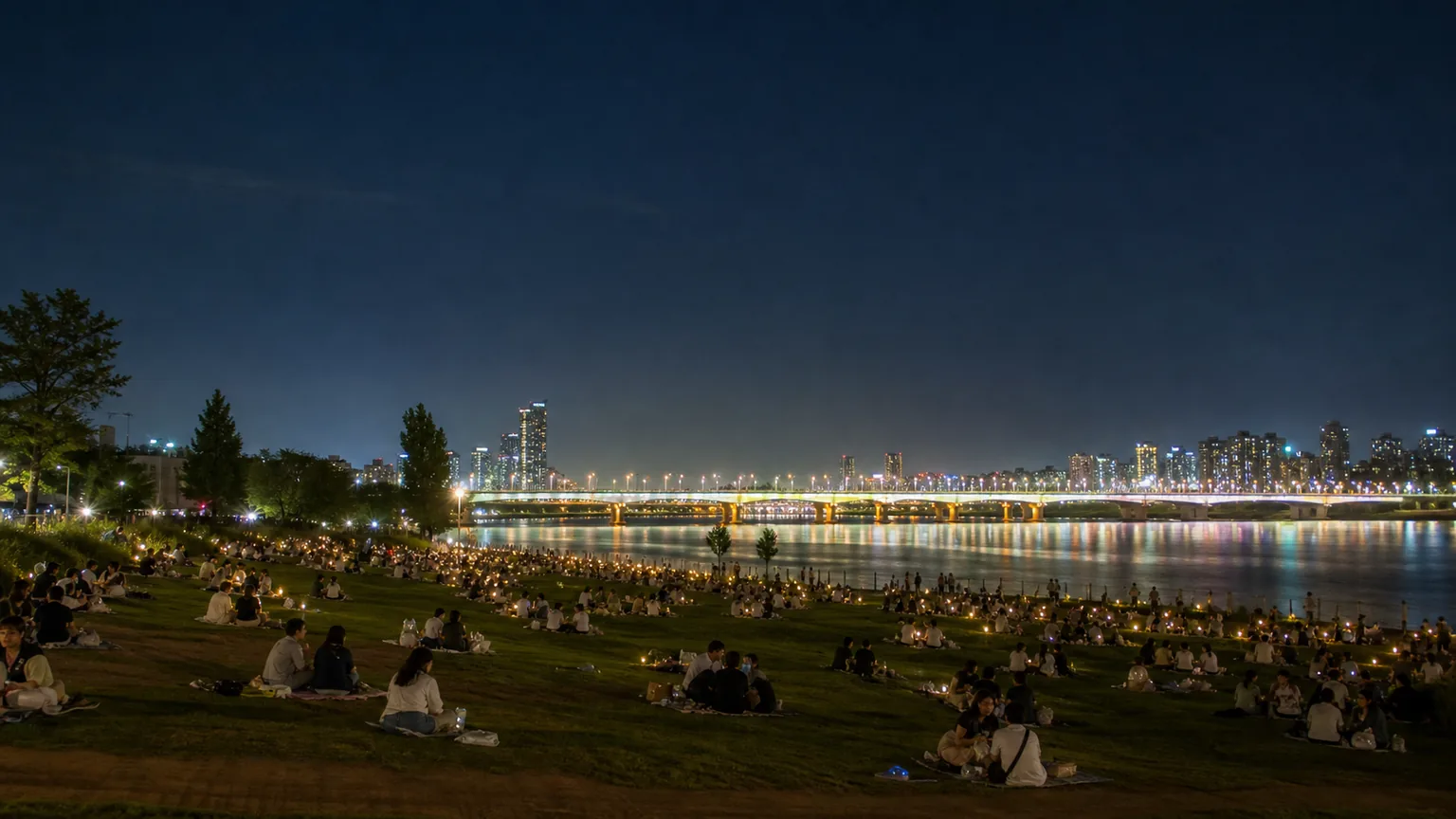
The Han is not simply scenery between north and south Seoul. Its parks make room for sitting, cycling, running, convenience-store snacks, performances and long conversations after work. That everyday mix is why a festival here can feel less like a fenced event ground and more like a public invitation. You may see families with folding chairs, friends sharing fried chicken, solo runners, commuters and visitors in the same stretch of lawn. None of those groups owns the view.
For a visitor, that is the cultural lesson worth carrying. Korea’s fast urban pace does not erase the value of pausing together. A river evening often works because the activity is deliberately light: meet, eat something simple, watch the sky change, and let the group decide whether to stay. You do not need a perfect picnic aesthetic or a full schedule. A small mat, water and a plan to take rubbish away are enough.
At the Han River, the most Seoul-like thing is often not the program on a stage. It is the shared permission to stay outside after the workday has ended.
Choose one park and give it time
There is no universal best Han River park. The right choice depends on where you are staying, how much walking your group enjoys, and whether you want an animated city view or a quieter patch of grass. The mistake is to chase several parks in one evening because they look close on a map. The river is broad, and transfers plus summer heat can make a short-distance itinerary feel longer than expected.
For a first visit, pick a park with a straightforward subway approach and arrive before your intended event or sunset window. Take ten minutes to orient yourself: find the nearest exit route, water, toilets and the path back to the station. Then settle in. If a programmed area is already full, do not push through a seated crowd for a better view. Walk along the river until you find a space that works and regard the detour as the point of being outdoors.
August brings a practical Seoul reality: heat, humidity and sudden rain. Bring water, a small portable fan if you use one, and a light layer for indoor air-conditioning on the return trip. An umbrella is useful for rain but awkward in a dense crowd; if it is pouring, choose shelter rather than forcing a lawn plan. Check weather alerts and official festival notices the same day. This is ordinary summer planning, not an attempt to control the evening.
Build an evening with room to change course
Try a simple three-part rhythm. First, arrive early enough to walk for fifteen or twenty minutes without a destination. Second, choose food after you have seen the crowd level rather than carrying a heavy meal across the city. Third, leave slightly before the final rush if your group is tired or if rain is likely. This keeps the practical parts from overshadowing the reason you came: the river is most enjoyable when you are not treating it like a queue.
If you want a festival activity, use the official listing as the authority for time and location. If a program does not suit your day, the park remains valid. That flexibility is especially useful for foreign visitors, who may not know which Korean-language booking systems or announcements are relevant. Ask a staff member for a simple direction, use a translation app for signs, and be prepared to choose a different patch of riverbank rather than argue with a crowd-control instruction.
Food can be part of the river ritual without becoming a logistics problem. Buy only what your group can comfortably carry and finish, keep drinks stable on uneven grass, and choose a meal that still works if a rain shower sends you toward a station. Convenience-store snacks are common at the river, but there is no need to imitate a viral order. A simple meal, shared water and time to sit are closer to the real purpose of a park evening than an overloaded shopping bag.
If you are traveling alone, the same principle applies. Choose a visible, well-used part of the park, keep your valuables close, and let the evening be small: a walk, a drink and a few minutes looking across the water. The river is sociable without requiring that you join a group. A solo visitor does not need to perform a picnic to belong in the space.
A festival-night rhythm that travels well
Late afternoon: check official updates, weather and transit. Early evening: arrive, locate facilities and take a short riverside walk. After sunset: enjoy one confirmed program or simply settle into the park atmosphere. Departure: pack every item you brought, then head for transit before the group is exhausted or the weather turns.
The etiquette issue: public comfort depends on small shared habits
Han River parks can feel relaxed because people quietly maintain the conditions that make them relaxing. Keep your group compact, leave paths clear for walkers and cyclists, and do not spread a mat across a busy route. Use bins where provided, but carry waste until you find the right one rather than leaving bags beside a full bin. Do not feed birds or leave food scraps; a scenic riverbank is not a disposable picnic set.
Sound matters as much as space. A small conversation or a phone at low volume is normal; a speaker loud enough to claim a whole lawn is not. If you are waiting for a performance, let people behind you see and avoid standing on furniture or barriers for a better recording. In rain, lower umbrellas around others when possible and follow staff directions promptly. These gestures are not complicated etiquette rules. They are how many different kinds of people can share the same summer evening.
Cycling paths deserve particular attention because they can look like part of the promenade after dark. Cross at clear points, keep children close, and do not stop for a group photo in the middle of a marked lane. If you rent or bring a bicycle, match your speed to the crowd and use lights after sunset. The river works best when walkers, runners and riders can predict one another’s movements.
Let the festival be an introduction, not a checklist
The 2026 festival dates give your trip a real seasonal anchor. But the enduring visitor value is the river’s civic role: it is where Seoul turns density into breathing room. That is why an evening can still succeed if a particular activity changes, if the weather cools the plan, or if your chosen lawn is too busy. The goal is not to prove that you found a viral viewpoint. It is to understand why local people return to the water again and again.
Choose one park, confirm what is actually running, arrive with a rain-ready plan and leave the space as you found it. In return, you get one of Seoul’s most generous experiences: a city-scale view that asks you to slow down.
Primary location
Yeouido Hangang Park, Seoul
Open in Naver Map