Seoul Heritage & Food
Taegeukdang: Seoul’s Oldest Bakery (1946) and What to Order
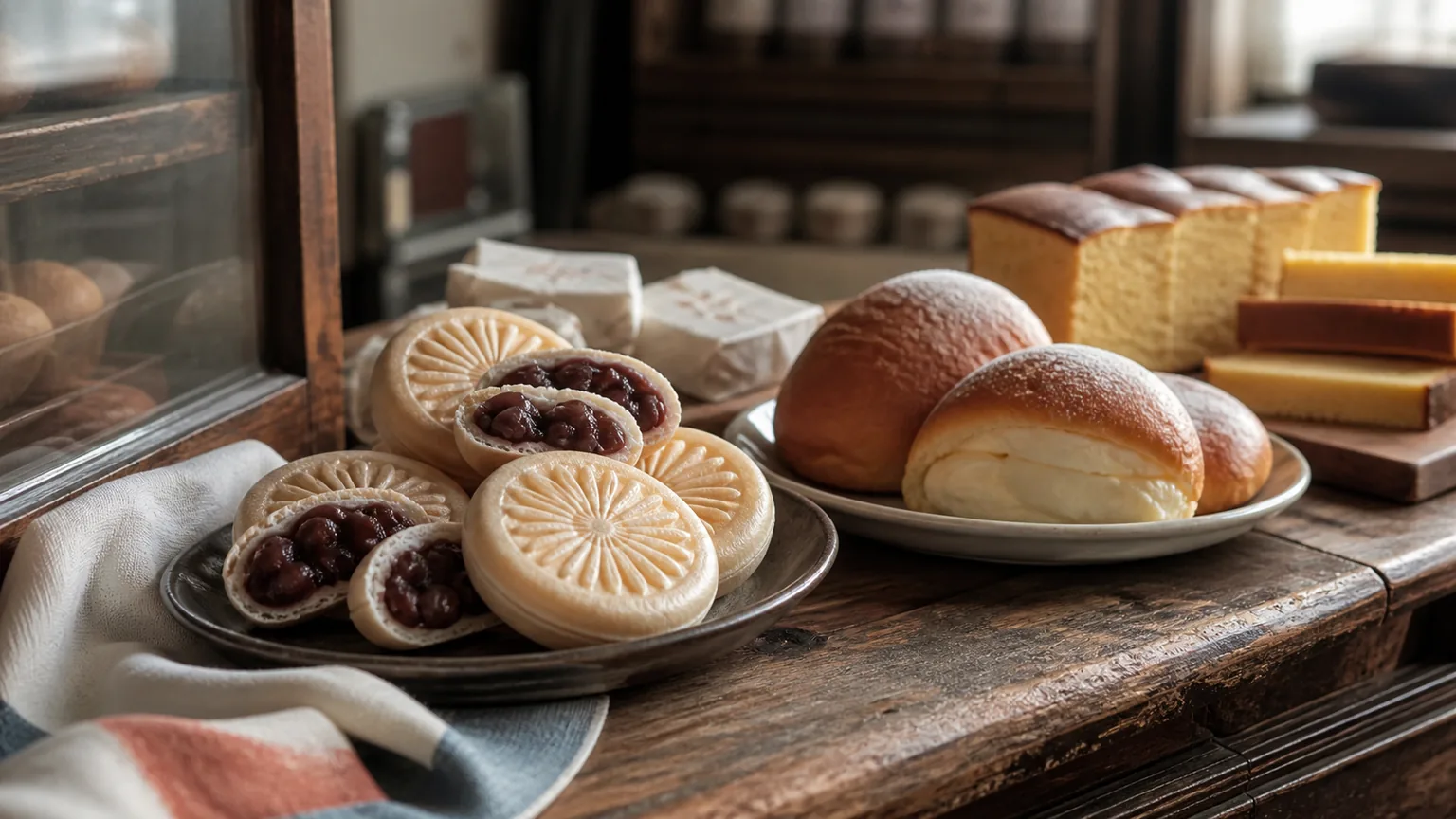
Taegeukdang opened in 1946 and is generally considered the oldest continuously operating bakery in Seoul. Its main store is in Jangchung-dong, and its best-known item is monaka — a red bean filling pressed between two thin wafer shells.
On August 15, Korea marks Gwangbokjeol, the day of liberation from Japanese colonial rule. The Korean word gwangbok, written 光復, literally carries the sense of “the light returning.” That expression makes Taegeukdang an unusually resonant destination on Liberation Day. This is not a memorial hall or a preserved historical house. It is a working bakery, and its story begins with a confectioner who learned his trade during the colonial period and then used that knowledge to build something for a newly liberated Seoul.
Founded in the first years after liberation, Taegeukdang is widely introduced as Seoul’s oldest bakery. Its name invokes the taegeuk, the red-and-blue symbol at the center of Korea’s national flag. The symbolism is direct: a bakery established to honor the return of national light, carrying a Korean name into a city trying to define its own everyday life again.
What Makes Taegeukdang Seoul’s Oldest Bakery
Colonial history often reaches visitors through dates, institutions and monumental architecture. A bakery offers a more intimate scale. Skills learned under colonial rule did not simply disappear in 1945. They were carried forward, reworked and given new meanings by Koreans building businesses in the liberated country. Taegeukdang’s founding story belongs to that transition.
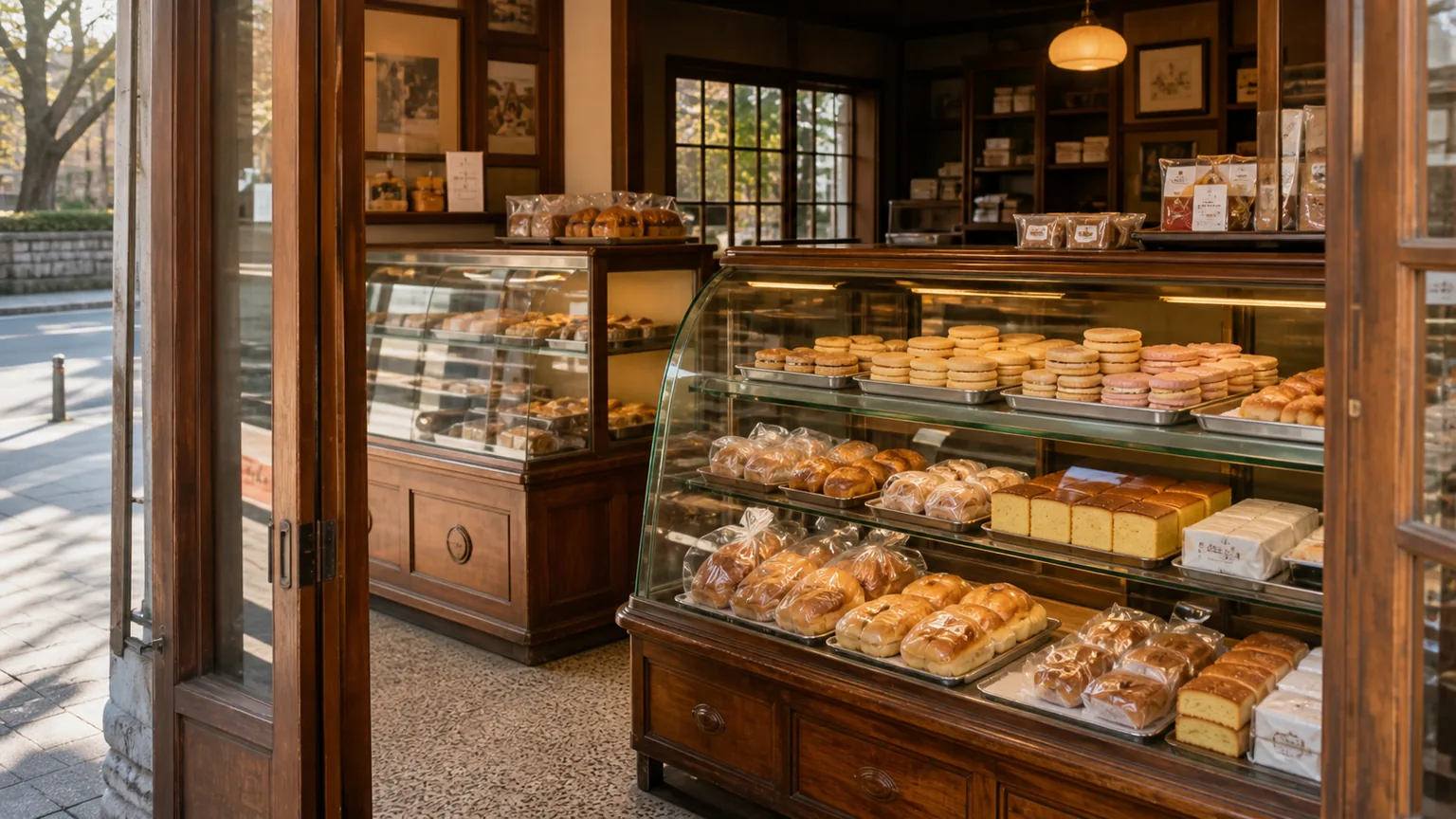
The bakery also complicates any neat division between “traditional” and “Western” food. Its glass cases belong to the Korean ppangjip—literally “bread shop”—a familiar urban institution where sponge cakes, cream-filled buns, cookies and Japanese-influenced sweets can sit side by side. The lineup reflects Korea’s layered modern palate rather than a single pure culinary origin.
What to Order at Taegeukdang
The classic order begins with monaka: two crisp wafers enclosing a sweet filling, most recognizably red bean. The pleasure is partly architectural. The shell should crack lightly before the dense filling takes over, giving the sweet a contrast that soft bread cannot provide. It pairs naturally with unsweetened tea or coffee.
Do not stop after the signature item. The broader appeal of the Jangchung-dong store is the old-school bakery vocabulary around it. Cream breads, sponge cakes, castella-like loaves and other familiar counter sweets show what “classic” means in a Korean city bakery. They may look modest beside highly styled café desserts, but that modesty is precisely the point: these are formats designed to be taken home, shared and remembered.
Monaka
Taste the wafer before it softens and notice the contrast with the red bean filling.
A soft classic
Choose one cream-filled or sponge-based bread to move from crisp to tender textures.
A simple loaf
Pick a take-home cake or loaf that shows the bakery’s everyday, family-table character.
Product availability can change through the day, so treat this sequence as a way of looking rather than a fixed shopping list. Ask what is available, choose one signature sweet and one less famous classic, and let the contrast do the storytelling.
A thoughtful Liberation Day stop
An August 15 visit gives the bakery’s name added weight. Yet the best approach is quieter than turning the shop into a patriotic photo set. Notice the continuity of the business, the older style of the counter and the mix of generations that a heritage bakery can attract. Buy enough to taste slowly, then carry the box into the rest of your central Seoul walk.
There is also a simple etiquette point. A long-established food shop is still a working retail space, especially on a holiday when signature items may draw more visitors. Keep the display and queue moving, ask before photographing staff or close-up work areas, and step aside before deciding what to order. Respect here is practical: it allows the place to remain a bakery rather than becoming only a backdrop.
For an overseas visitor, this is what makes Taegeukdang worth the detour. The historical meaning is not separated from appetite. Liberation, adaptation and daily life are held together in a small edible object—one that can disappear in a few bites but leave a much longer aftertaste.
Primary location
Taegeukdang Jangchung Main Store
7, Dongho-ro 24-gil, Jung-gu, Seoul
Check current opening hours and product availability before setting out, particularly on public holidays.